
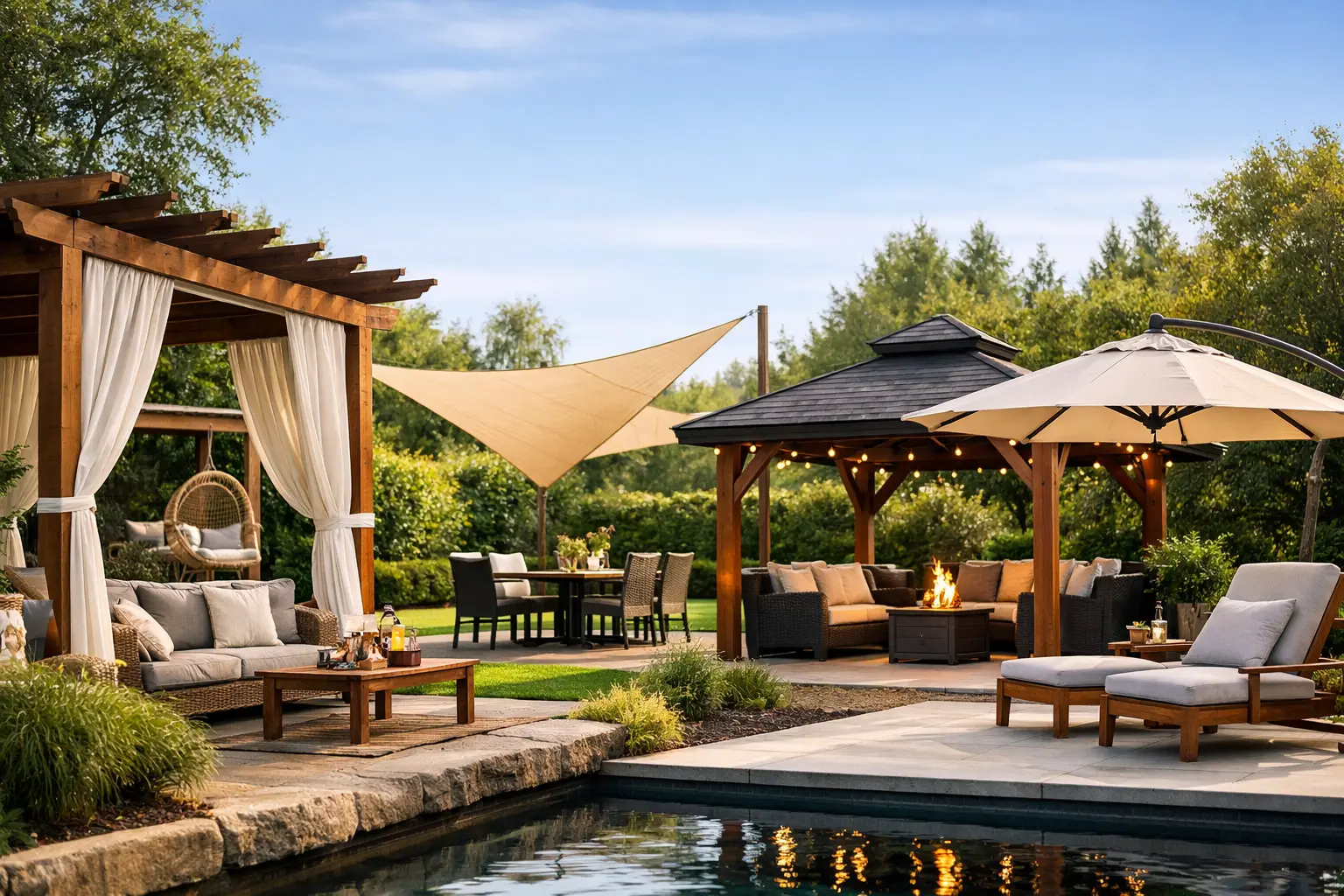
The Florida backyard can look perfect at 9 a.m. and feel unusable by noon. Between hard sun, heavy humidity, sudden rain, and coastal wind, choosing the best backyard shade structures is not just about style. It is about building a space you will actually use, and making sure it holds up when the weather stops being polite.
For Gulf Coast homeowners, shade has to do more than cast a shadow. It needs to protect outdoor furniture, cut glare, create comfort for family and guests, and stand up to the kind of climate that exposes weak materials fast. That is why the right choice depends on how you want to use the space, how much weather protection you need, and whether you are investing for a few seasons or for decades.
What makes the best backyard shade structures?
A good shade structure looks great on day one. A great one still looks great after years of sun, rain, salt air, and storm season. In Florida and nearby coastal markets, that difference matters.
The best backyard shade structures usually earn their value in four areas: coverage, durability, appearance, and engineering. Coverage is obvious – you want relief from direct sun and better comfort outdoors. Durability is where many off-the-shelf options start to fall behind. Fabric fades, light-gauge aluminum can feel flimsy, and poorly anchored systems may not be suited for demanding wind conditions.
Appearance matters too. Backyard improvements should feel like part of the home, not like an afterthought bolted to the patio. And then there is engineering, which is often ignored until permit questions, drainage issues, or storm concerns show up. In this region, structure matters just as much as shade.
The 10 best backyard shade structures for Florida homes
1. Insulated patio covers
If your goal is strong sun protection with a more finished, room-like feel, insulated patio covers are hard to beat. They provide full overhead shade and help reduce heat transfer better than simple open-roof designs. That makes a real difference during long summer afternoons.
They are especially well suited for homeowners who want dependable coverage over a grilling area, outdoor dining space, or rear patio that gets daily use. The trade-off is that you give up open sky above. For many homeowners, that is an easy trade when the reward is cooler, more usable square footage just outside the back door.
2. Pergolas
Pergolas remain one of the most popular choices because they add architecture as much as shade. They define space beautifully and give a backyard a more upscale, custom look. They also work well over patios, poolside seating areas, and garden transitions.
That said, a pergola is not full weather protection. It filters sunlight rather than blocking it completely unless additional shade elements are added. In mild climates that may be enough. In Florida, many homeowners love the look but eventually want more coverage than a decorative pergola alone can provide.
3. Louvered roof systems
A louvered roof gives you flexibility. Open it for sun and airflow, close it for shade and rain protection. For homeowners who want control throughout the day, that versatility is a major advantage.
The catch is complexity. More moving parts generally mean a more specialized system and a higher price point. It can be an excellent fit for luxury outdoor living spaces, but it is important to look closely at structural quality, drainage design, and long-term reliability in a hot, wet, storm-prone climate.
4. Solid roof patio enclosures
For maximum protection, a solid roof enclosure creates a more complete outdoor living area. This option is ideal when you want to extend usable space in a meaningful way rather than just create occasional shade. It can support a more comfortable environment for entertaining, relaxing, or even creating a secondary living zone.
This type of structure often makes the most sense when homeowners are thinking beyond shade and closer to daily lifestyle use. It is also one of the strongest answers to Florida weather, especially when engineered and installed as a true permanent addition.
5. Screen rooms with roof protection
A screen room is one of the smartest shade solutions for homeowners who are tired of sun and insects fighting for control of the backyard. With overhead coverage and screened walls, it creates a more comfortable space for dining, reading, or hosting guests without feeling closed in.
This is where climate-specific design matters. A weak frame or generic materials may look fine at first, but heavy weather exposes shortcuts fast. A properly built screen room can become one of the most used spaces on the property.
6. Shade sails
Shade sails are affordable, modern-looking, and useful for targeted coverage. They can work over play areas, smaller patios, or spots where a permanent structure is not practical.
Still, they are usually a lighter-duty solution. Fabric wear, tension issues, and storm removal can make them less appealing for homeowners who want something permanent and low-maintenance. They are best viewed as a flexible option, not a long-term structural upgrade.
7. Retractable awnings
Retractable awnings can provide quick shade exactly when you want it. They are often chosen for decks and patios where homeowners want the option to pull shade back and enjoy open sun at other times.
Their main limitation is exposure. Fabric and mechanical components take a beating in strong sun, moisture, and wind. They can be useful, but they are generally not in the same class as a fixed, engineered structure when durability is the top priority.
8. Gazebos and pavilions
Gazebos and pavilions create a destination in the yard. They are ideal for homeowners who want a freestanding covered area away from the house, perhaps near a pool, garden, or outdoor kitchen.
They can be beautiful, but the right fit depends on layout and purpose. A detached structure adds character, though it may not integrate with the home as naturally as an attached cover or enclosure. In smaller backyards, it can also consume valuable open space.
9. Carports used as dual-purpose shade structures
A well-built carport is not just for vehicles. In some homes, it doubles as shaded utility space, gathering space, or general outdoor cover for boats, trailers, equipment, or overflow entertaining.
This option is more practical than decorative, but that practicality has real value. If your property needs hardworking coverage more than a polished lounge setting, a carport can solve multiple problems at once.
10. Custom sunrooms
A sunroom moves beyond shade and into full outdoor living expansion. For homeowners who want year-round comfort, protection from weather, and a more finished extension of the home, this is often the premium choice.
It is also the biggest investment on the list, so it needs to be approached with the right expectations. But when designed and built correctly, a sunroom delivers far more than relief from the sun. It creates a new way to use the home.
How to choose the right structure for your backyard
Start with how you want the space to function. If your main issue is afternoon heat over an existing patio, a patio cover or pergola may be the right answer. If bugs, rain, and daily comfort are all part of the problem, a screen room or enclosure may make more sense. If you want genuine expansion of livable space, a sunroom or solid roof structure will usually deliver more long-term value.
Then think about permanence. Temporary and light-duty shade options can look attractive because they cost less upfront. But in Florida, cheaper materials often become more expensive over time through repairs, replacements, fading, corrosion, or storm damage. Homeowners who plan to stay put usually benefit from choosing stronger materials and a structure designed specifically for local code and weather demands.
Design matters too. The best projects feel integrated with the home, not separate from it. Rooflines, framing color, finish quality, and drainage details all shape whether the final result feels premium or patched together.
Why material and engineering matter more on the Gulf Coast
This is where many buying decisions are won or lost. Two shade structures can look similar in a photo and perform very differently in real life. Coastal sun, salt exposure, driving rain, and wind loads will expose weak framing, thin finishes, and poor installation methods much faster than milder climates do.
That is why factory-direct manufacturing and engineered installation carry real weight. A shade structure should not be treated like a decorative accessory. It should be treated like a structural improvement to the home. Titan Sunrooms builds with that mindset, using proprietary Colorbeam systems designed for strength, appearance, and weather resistance beyond conventional lightweight alternatives.
For homeowners, the practical takeaway is simple: ask what it is made of, how it is anchored, how it handles water, whether it is engineered for the region, and who stands behind the installation years from now. Good shade starts with design. Great shade starts with structure.
The best backyard shade structures are the ones you will still trust years from now
The right backyard upgrade should make your home more comfortable on the hottest days, more useful when guests come over, and more valuable every season you own it. Whether that means a pergola, a patio cover, a screen room, or a full sunroom, the smartest choice is the one built for your climate, your lifestyle, and the long haul.
If a structure looks good but cannot handle the Gulf Coast, it is not really an upgrade. Build for the weather first, and the comfort will follow.
