
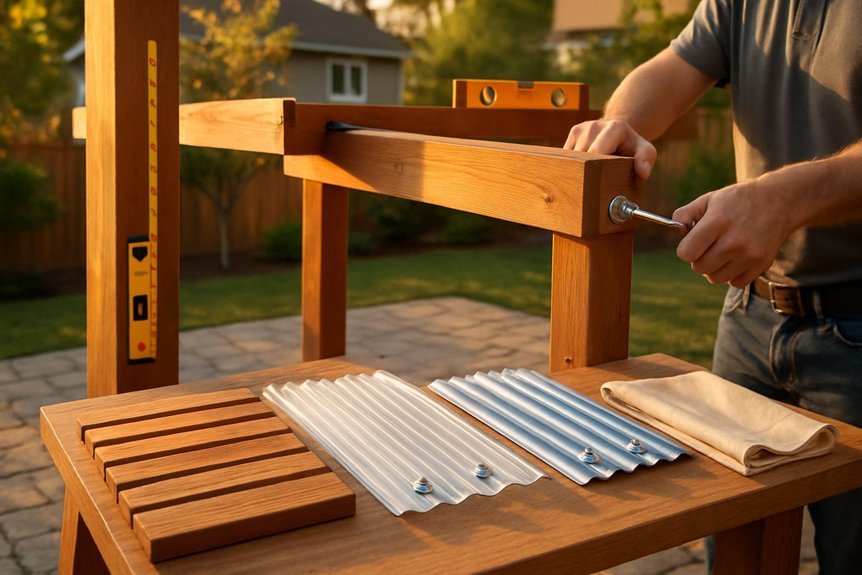
When constructing a pergola, first pick a well-lit area with ideal space and leveled ground, adhering to property lines. Choose durable materials like cedar or cost-effective pressure-treated wood, and have essential tools ready. Confirm proper ground prep by digging post holes with gravel and concrete support. Build the framework using precise measurements, securing with galvanized screws for stability. Explore different roof options like retractable canopies or louvered designs for enhanced functionality. Discover more to transform your outdoor space.
Selecting the Ideal Location and Size
How do you choose the perfect spot and size for your pergola? Start by evaluating your outdoor area for the ideal location.
Check the property orientation to maximize sunlight and create a shaded area. Make certain the ground is level and offers adequate space for your pergola’s size and intended function, whether for entertaining or shade.
Consider local building codes; they might dictate how close you can build to property lines. Pergola dimensions typically range from 10×10 feet to 20×20 feet, offering flexibility based on your needs.
The height of the pergola, usually between 8 and 10 feet, should complement your landscape without overwhelming it.
Finally, account for weather conditions to guarantee your pergola stands strong and functional. Choosing factory-direct materials can ensure superior materials and durability for long-lasting performance.
Choosing the Right Materials and Tools
After determining the ideal spot and size for your pergola, focus on selecting the right materials and tools to bring your vision to life.
Opt for high-quality lumber like cedar or redwood for enhanced durability and rot resistance. If you’re budget-conscious, pressure-treated wood is a solid alternative.
Essential tools for your construction include a circular saw, drill, level, and clamps. Don’t forget safety gear to guarantee a safe assembly process. Use a combination square for accurate measurements and cuts.
To boost structural integrity, consider galvanized screws and metal post bases. Research local suppliers for cost-effective materials and verify that your chosen roofing materials—whether wood, metal, or polycarbonate—are readily available.
Your choices here will directly impact the longevity and safety of your pergola. Titan Sunrooms offers Colorbeam technology designed for coastal durability and low maintenance.
Proper Ground Preparation and Post Installation
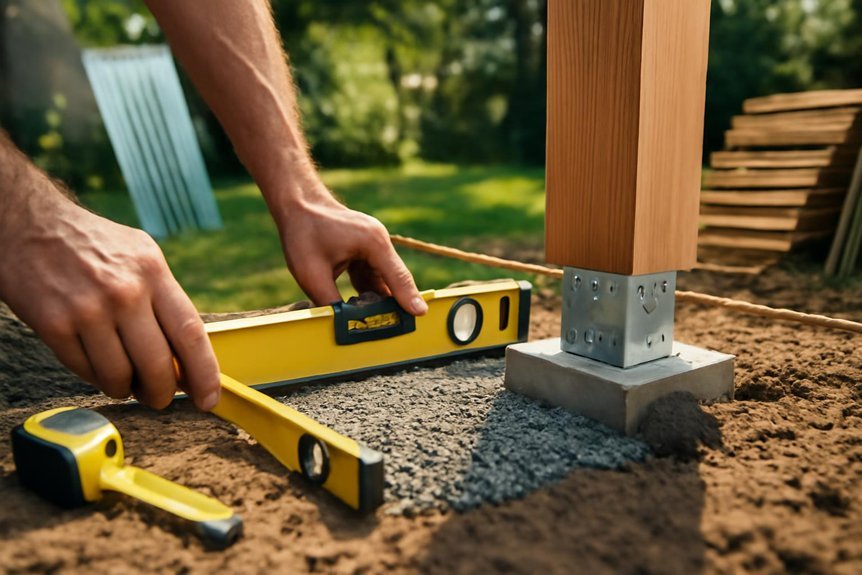
When preparing the ground for your pergola, guaranteeing stability and longevity requires meticulous attention to detail.
Start with proper ground preparation by digging post holes at least 30 inches deep, following local building codes for frost depth and soil type. Add gravel for drainage to the bottom of each hole, preventing moisture accumulation that could lead to rot and attract insects.
Align posts using a string line, guaranteeing they’re at the same height and plumb before using concrete to anchor them. Stabilize posts with 2×4 or 2×6 braces while the concrete sets.
Pre-drill holes to avoid splitting the wood, then secure everything with galvanized screws to prevent rust. This careful post installation guarantees a strong, lasting pergola structure.
Building and Finishing the Pergola Framework
To build and finish your pergola framework with precision, start by aligning beams and rafters accurately; this guarantees the bottom edges of the beams face upwards for proper cutting and fitting.
Refer to your pergola plans and verify compliance with local building codes. Use necessary tools like a combination square for exact measurements and notched rafters for stability.
Weather protection is essential, so apply exterior latex or acrylic paint to safeguard the wood. This guarantees a low maintenance, beautiful pergola.
Regular maintenance, such as inspections every three to four months, will help detect any damage.
Customization options, like decorative rafter ends, add personal flair. With careful planning, your DIY project becomes a stunning addition with a reliable roofing system.
Exploring Pergola Roof Options for Enhanced Functionality

Having completed your pergola framework, it’s time to contemplate the roofing options that will boost both the functionality and aesthetics of your outdoor space.
Pergola roofs come in various styles, from fixed options like metal or polycarbonate to flexible retractable canopies, offering different levels of shade and protection.
Louvered roofs with adjustable slats let you control light and airflow, enhancing comfort and versatility.
For a natural look and aesthetic appeal, consider living roofs that integrate vegetation, providing natural insulation and shade.
If low-maintenance options are your priority, glass roofs offer an airy atmosphere but need regular upkeep.
As you build your pergola, assess your climate, preferences, and maintenance willingness to guarantee weather resistance and long-term satisfaction in your outdoor living space.
Frequently Asked Questions
What Type of Roof Is Best for a Pergola?
You should choose a pergola roof based on your needs: metal roofs for low maintenance, polycarbonate sheets for light, fabric covers or retractable canopies for flexibility, living roofs for eco-friendliness, and solar panels for energy efficiency.
What Is the Golden Ratio for a Pergola?
The Golden Ratio for a pergola involves using proportions like 1.618:1 to enhance pergola dimensions, ensuring aesthetic appeal and structural integrity. It balances design, optimizes space, manages sunlight exposure, and complements wood choices and maintenance requirements.
Does a Pergola With a Roof Need Planning Permission?
You might need planning permission for your pergola with a roof, depending on local regulations. Consider the installation process, roof materials, safety standards, and aesthetic considerations. Consult homeowner associations to align with construction guidelines and project budget.
Do You Need a Permit to Put a Roof on a Pergola?
Yes, you’ll likely need a permit to put a roof on a pergola. Don’t worry about the hassle—knowing permit requirements, roof materials, and local regulations guarantees your project meets construction guidelines, zoning laws, and safety standards.
Conclusion
You’ve now got the blueprint for creating a stunning pergola that’s both stylish and functional. Remember, the journey of building your pergola is like sculpting a masterpiece from clay—each detail adds to its beauty. With the right location, materials, and thoughtful roof options, your outdoor space will become a personal oasis. So, roll up your sleeves and let your creativity flow; your dream pergola is just a few steps away!
