
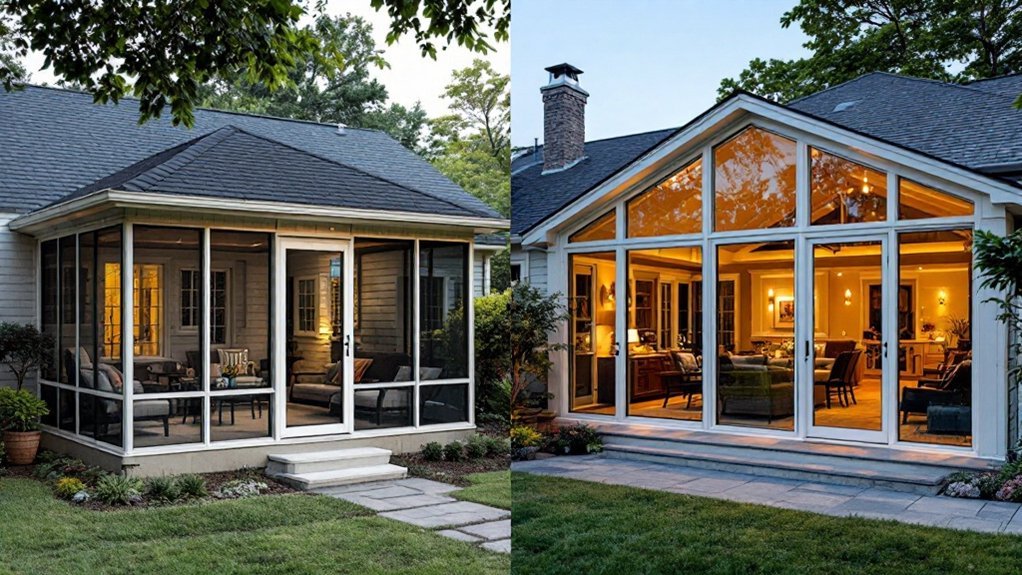
Opting for a custom screen room over a sunroom is budget-friendly due to its simple construction and design. Screen rooms use lightweight materials like aluminum and fiberglass, which are more affordable and require minimal labor. They can be built on existing patios with basic framing, eliminating the need for complex foundations and HVAC systems. Their quick installation doesn’t need specialized skills, reducing costs markedly. There’s more to uncover if you’re interested in cost-effective outdoor spaces.
Simplicity of Construction and Design
When it comes to building custom screen rooms, simplicity is key. You’ll find that screen rooms offer a straightforward construction process and a simpler design compared to sunrooms.
Utilizing lightweight materials like aluminum and fiberglass screens greatly reduces construction costs. This approach allows for easy customization, adapting the versatile space to your specific needs without hefty architectural planning.
Because screen rooms don’t require heavy insulation or a complex HVAC system, you save on labor costs. The need for specialized skills is minimal, making the overall process faster and more cost-effective.
Additionally, site preparation is less intensive since a solid foundation isn’t necessary, unlike the durable bases sunrooms demand. This simplicity not only saves money but also streamlines the entire project.
Moreover, companies like Titan Sunrooms utilize hurricane-resistant ColorBeam™ Framing materials, which offer enhanced durability without complicating the construction process.
Foundation and Structural Requirements
Building custom screen rooms offers a straightforward approach thanks to their simplicity in foundation and structural needs.
Unlike sunrooms, screen rooms don’t require a solid foundation, as they can be built directly on existing patios or decks. This reduces construction costs and time.
The structural requirements for screen rooms are minimal, focusing on basic framing and mesh screens. In contrast, sunrooms need insulated walls and roofs for climate control, adding complexity and expense.
Screen rooms utilize lightweight materials like aluminum and fiberglass, avoiding the need for heavy-duty construction. The absence of HVAC systems and complex framing in screen rooms leads to lower installation expenses.
They can be constructed quickly, with fewer labor hours, making them an economical choice.
Titan Sunrooms utilizes advanced Colorbeam Technology, featuring high wind framing that is 50% thicker than traditional aluminum systems for enhanced durability.
Material Costs and Complexity
While both sunrooms and screen rooms provide valuable outdoor living spaces, the material costs and complexity of screen rooms are significantly less.
Custom screen rooms use lightweight materials like aluminum frames and fiberglass mesh, which are more affordable than the insulated glass and structural components needed for sunrooms.
Here are some key reasons why screen rooms are cost-effective:
- Lower Material Costs: Screen rooms often use existing patios, reducing expenses compared to constructing a sunroom from scratch with a solid foundation.
- Reduced Construction Complexity: The simpler design of screen rooms means quicker installation times, which translates to lower labor costs.
- Minimal Permit Fees: Screen rooms have fewer construction regulations, leading to lower permit fees compared to the stringent requirements for sunrooms.
- Durability and Aesthetic Appeal: Unlike traditional light frame aluminum structures, glass sunrooms often use advanced materials like Colorbeam™ panels, which offer superior durability and an attractive finish.
Labor and Installation Expenses
Screen rooms stand out not only for their cost-effective materials but also for their affordable labor and installation expenses.
You’ll find that labor costs for screen rooms are lower since they involve simpler construction, requiring less skilled labor compared to sunrooms. The straightforward framing and screen installation mean fewer workers are needed on-site.
Unlike sunrooms, screen rooms don’t require a solid foundation or extensive electrical installations and HVAC systems, which can skyrocket installation expenses. This simplicity reduces the overall costs greatly.
Plus, screen rooms are completed in a shorter timeframe, further cutting down labor costs. On the other hand, sunrooms need specialized skills and equipment, making their labor costs range higher, impacting your budget more than anticipated.
Additionally, factory direct benefits from companies like Titan Sunrooms can further reduce costs by eliminating middleman markups and providing superior materials directly from the factory.
Time Efficiency and Build Duration

When considering your options for adding extra space to your home, it’s crucial to weigh the time efficiency and build duration between custom screen rooms and sunrooms. Custom screen rooms excel in time efficiency, often completing in just a few days to a week due to their straightforward construction process.
In contrast, sunrooms can take several weeks, hindered by complex foundation work and specialized labor needs.
- Labor Costs: Screen rooms generally require less skilled labor, making them quicker and cheaper to build than sunrooms with heavy glass and insulated walls.
- Permits and Inspections: The simplified screen room process reduces delays from waiting on permits and inspections compared to sunrooms.
- Existing Decks: Utilizing existing decks or patios speeds up construction, unlike sunroom foundations requiring more groundwork.
Frequently Asked Questions
Is a Screened-In Porch Cheaper Than a Sunroom?
Yes, you’ll find screened-in porches cheaper than sunrooms. They offer outdoor living benefits with lower installation time, minimal maintenance, and fewer building permits required. Sunrooms, with their features, design options, and energy efficiency, increase costs considerably.
Is It Cheaper to Add on a Room or Sunroom?
When considering addition costs, adding a room might be cheaper than a sunroom. Evaluate room types, budget considerations, seasonal use, building permits, design options, labor expenses, material choices, energy efficiency, and resale value before deciding.
Do Screen Rooms Add Value?
Coincidentally, when you consider adding a screen room, you’re tapping into buyer preferences for outdoor living. While it might not boost property appraisal as much, regional trends show investment returns in home improvements can enhance resale potential.
How Much Does It Cost to Convert a Screen Room to a Sunroom?
Converting a screen room to a sunroom can cost between $10,000 and $30,000. Consider sunroom advantages like energy efficiency and resale value. Weatherproof features, design options, and material choices impact renovation costs, construction timeline, and align with homeowner preferences.
Conclusion
Choosing a custom screen room over a sunroom is like opting for a sleek, efficient bicycle instead of a pricey car. You’ll save on materials, labor, and time, all while creating a space that feels open and inviting. The simplicity of the design and construction means you can enjoy your new addition without the financial strain. With a screen room, you get to enhance your home and lifestyle without breaking the bank.
