
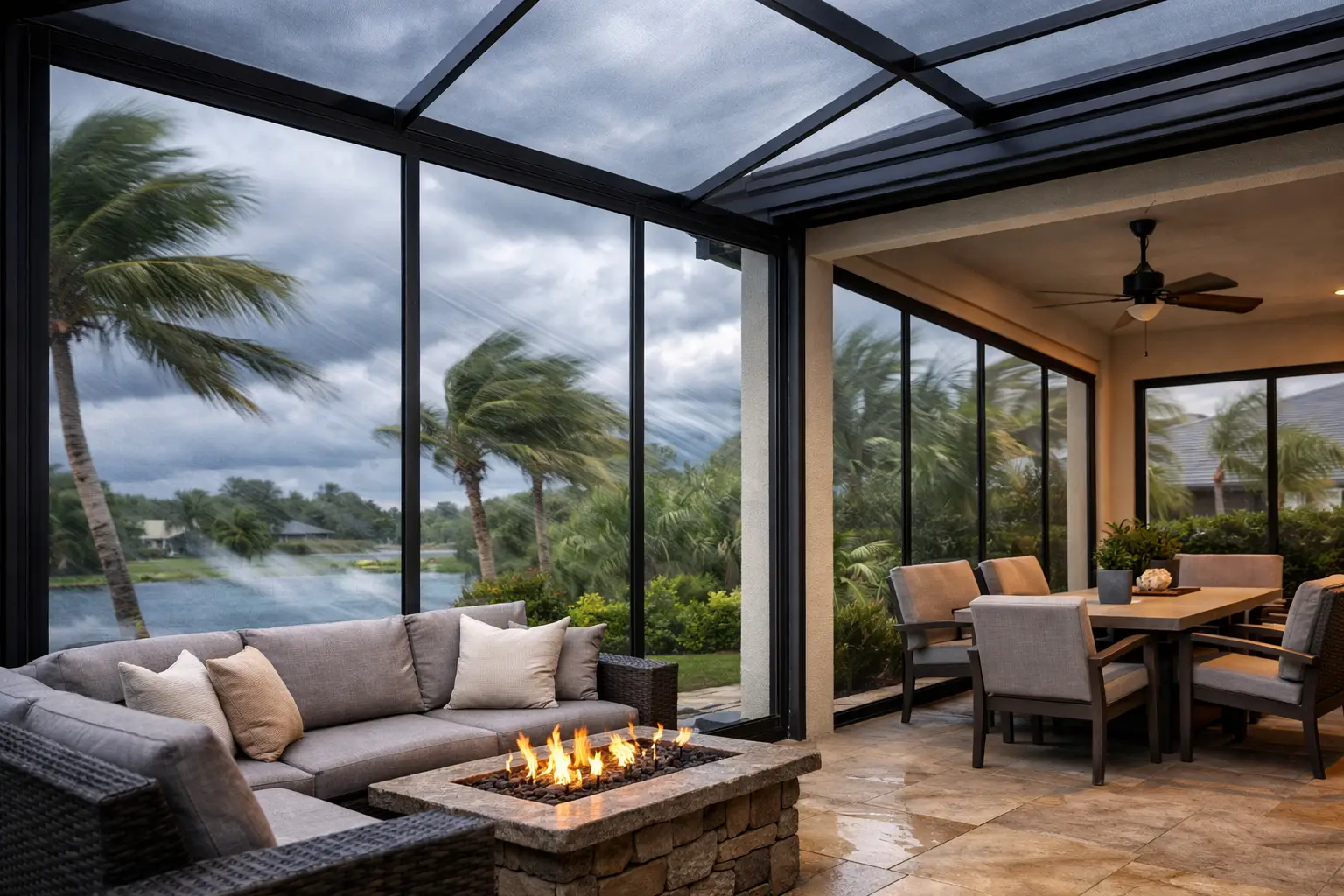
A backyard addition looks great on paper until the first serious storm band moves through. In Florida and along the Gulf Coast, a wind rated patio enclosure is not a nice extra. It is the difference between a structure built for real weather and one that becomes a liability when conditions turn rough.
That is where many homeowners get tripped up. They hear terms like wind load, code compliance, insulated roof, or reinforced framing and assume every enclosure on the market is built the same way. It is not. If you are investing in a patio enclosure for a coastal or storm-prone region, the engineering behind it matters just as much as the look of it.
What a wind rated patio enclosure actually means
A wind rated patio enclosure is designed and engineered to resist specific wind pressures based on local building code requirements. That rating is not just a sales phrase. It should reflect the way the structure is framed, anchored, roofed, and integrated with your home.
In practical terms, wind rating is about how the enclosure performs when uplift, lateral pressure, driving rain, and debris-heavy conditions hit your property. In Florida, those loads can be severe, especially near the coast. A basic patio cover or screen room that works in a mild climate may not be enough here.
The right enclosure has to account for your exact site conditions, including location, exposure, size, roof span, attachment points, and local code zone. That is why custom engineering matters. A one-size-fits-all package may be cheaper up front, but it often cuts corners where homeowners cannot see them.
Why wind rating matters more on the Gulf Coast
Patio enclosures in this region do more than create shade. They stand between your home and a punishing mix of wind, heat, humidity, salt air, and sudden storms. That environment exposes weak materials fast.
Light-duty aluminum systems are a common example. They may look acceptable when first installed, but many lower-grade systems flex more, dent easier, and hold up poorly against corrosion over time. In a high-wind region, that is a real concern. Strength is not just about surviving one storm. It is about maintaining structural integrity year after year.
A properly engineered enclosure also protects the value of the rest of your home. If a roof system lifts, fasteners loosen, or water gets forced into connection points, the damage can spread beyond the enclosure itself. You are no longer talking about an outdoor upgrade. You are talking about repairs, insurance issues, and avoidable stress.
The parts of a wind rated patio enclosure that matter most
Not all wind performance comes from one feature. It is the full system that counts.
Framing strength
The frame carries the load. If posts, beams, and roof supports are undersized or made from thinner material, the entire enclosure is compromised. Stronger framing gives the structure better resistance to twisting, bowing, and uplift pressure.
For homeowners comparing options, this is where premium systems stand apart. Heavier-duty engineered components with better structural design simply perform better than commodity-grade enclosure materials. They also tend to look cleaner and more substantial, which matters when the enclosure is attached to a well-kept home.
Roof design and attachment
The roof is often the first place wind pressure gets aggressive. That means panel strength, pitch, fastening patterns, and the way the roof ties into the home all deserve close attention. A roof system should be designed for more than shade. It should be built to handle uplift and channel water away effectively.
This is especially important during wind-driven rain events, when weak roof transitions can lead to leaks and water intrusion. A better roof connection is not flashy, but it protects your investment.
Anchoring and foundation connection
A strong enclosure still fails if it is not anchored correctly. Fastener type, embedment depth, slab condition, and structural attachment to the home all play a role in wind resistance. This is not a detail to gloss over.
A factory-direct manufacturer with engineering oversight has an advantage here because the system is designed, fabricated, and installed as one package. That usually leads to better consistency than piecing together parts from different suppliers and hoping everything works together under load.
Screens, windows, and wall systems
If your enclosure includes screen walls, glass, or solid wall sections, those elements need to match the demands of the structure. A large opening changes pressure behavior. So does the weight and rigidity of glass panels or composite wall sections.
This is where custom design matters again. A patio enclosure with expansive views may need different structural support than a smaller screened area. The best result balances openness, appearance, and strength instead of sacrificing one for the other.
Code compliance is not optional
Homeowners often ask whether wind rating is really necessary if the enclosure is just for comfort and outdoor use. In this region, the answer is yes.
Building codes exist because storm exposure is real. A code-compliant patio enclosure is designed around local wind load requirements, not generic national assumptions. That protects your home, your family, and your investment.
It also protects you during resale and insurance conversations. Structures that are engineered and permitted properly tend to create fewer headaches later. Cheap installations can become expensive when they trigger code issues or require retrofit work after the fact.
That is one reason many Florida homeowners prefer working with a company that manufactures its own systems, engineers for local conditions, and installs with trained crews. When one team controls the process, there is less finger-pointing and more accountability.
Style still matters, but not at the expense of strength
A strong enclosure should not look industrial or out of place. Homeowners want storm-ready construction, but they also want a finished space that adds beauty, comfort, and curb appeal.
The good news is that a wind rated patio enclosure can absolutely do both. Better framing systems tend to create a more upscale appearance because the components are cleaner, straighter, and more intentional. Roof lines can be designed to complement the home. Screen or glass sections can open up views without making the structure feel flimsy.
There is always a trade-off to consider. More glass can mean a more open, premium feel, but it may also affect heat gain and structural design. A fully screened room offers airflow, but it will perform differently than a glass enclosure during heavy weather. A solid insulated roof delivers more shade and comfort, but it changes the look and light level. The right answer depends on how you want to use the space and how exposed your property is.
What to ask before you buy
If you are shopping for an enclosure, do not stop at brochures and renderings. Ask how the structure is engineered for your specific address. Ask what wind loads it is designed to meet. Ask about framing material, roof attachment, anchoring method, permitting, and warranty.
You should also ask who actually makes the system. That question matters more than many homeowners realize. A reseller may offer a polished sales presentation, but if they do not manufacture or control the system, you may get less clarity on materials, engineering, and long-term service.
Titan Sunrooms built its reputation around that difference. Factory-direct manufacturing, engineered systems, certified installation, and long-term warranty coverage give homeowners a stronger level of confidence than off-the-shelf enclosure packages.
The long-term value of building it right
A wind rated patio enclosure costs more than a bargain patio cover for a reason. You are paying for stronger materials, better engineering, code compliance, custom fabrication, and a structure that is built for the climate you actually live in.
That higher standard often pays for itself over time. You get a more usable outdoor space, fewer maintenance worries, better protection against storm damage, and a finished addition that feels like part of the home instead of an afterthought. For many homeowners, that is the whole point. They are not just buying a structure. They are creating a place to relax, entertain, and enjoy the property more often.
If you live in Florida or along the Gulf Coast, build for the weather you know is coming, not the forecast you hope for.
