
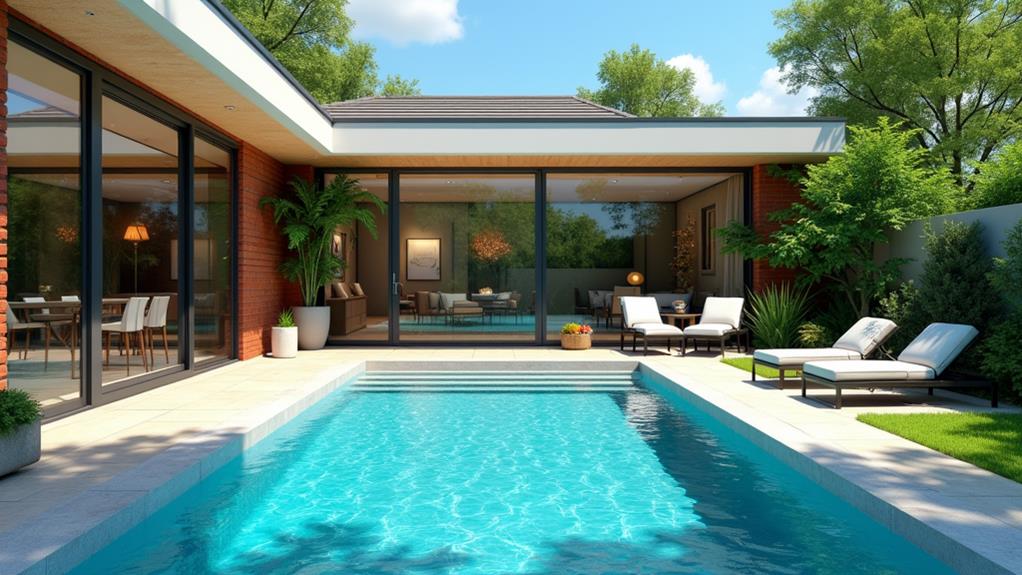
Customers frequently ask about the benefits of pool enclosures, including year-round outdoor enjoyment, reduced maintenance, increased safety, and UV protection. Choices in materials, such as aluminum and polycarbonate, offer varying strengths and durability. Regular maintenance, including cleaning and inspections, is vital for longevity and functionality. Installation costs can vary, typically ranging from $6,000 to $12,000, with additional costs for custom features and permits. For those considering adding a pool enclosure, these factors provide a thorough overview essential for making an informed decision. Explore further details to understand the complete scope of enhancements.
Benefits and Advantages
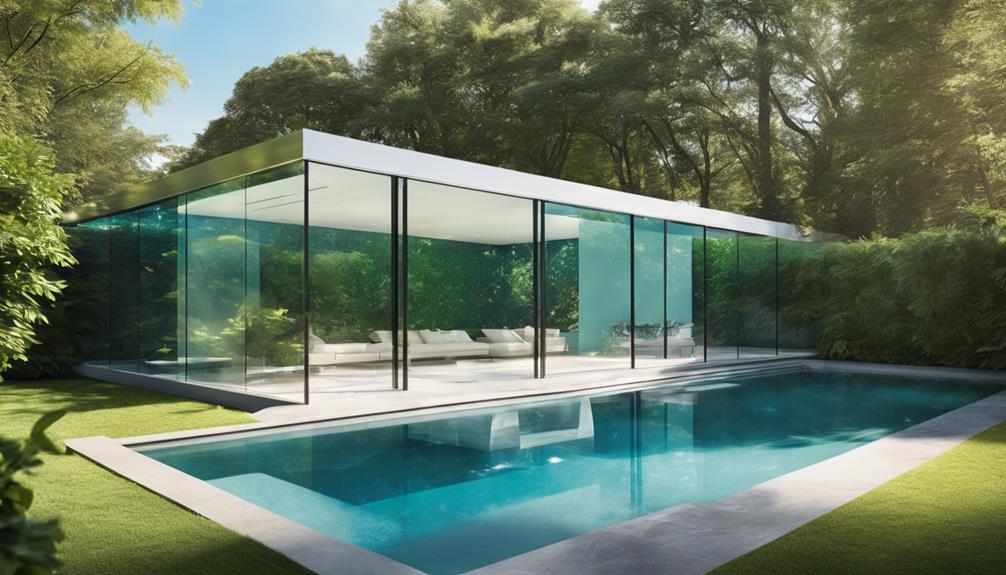
A well-designed pool enclosure can transform a simple backyard pool into a year-round oasis, offering a multitude of benefits and advantages. One of the primary benefits of pool enclosures is their ability to enhance outdoor enjoyment throughout the year. By providing protection from various weather elements, families can utilize their pools regardless of the season, ensuring that the pool remains a central feature of outdoor activities.
Additionally, pool enclosures greatly reduce maintenance requirements. They act as barriers that keep debris, leaves, and pests out of the pool, resulting in cleaner water and less cleaning time. This not only preserves the pool’s aesthetic appeal but also reduces the frequency of required maintenance tasks.
Safety for children and pets is another critical advantage of installing a pool enclosure. By preventing accidental falls into the pool, enclosures offer peace of mind for families, ensuring that the pool area is secure.
Moreover, pool enclosures offer protection from harmful UV rays through their screens and panels. This shielding reduces the risk of sunburn and long-term skin damage, contributing to a safer swimming environment.
Lastly, the installation of a pool enclosure can enhance property value and provide additional privacy, making outdoor spaces more appealing for homeowners and potential buyers.
UV Protection Options
Maximizing the benefits of a pool enclosure involves considering various features, one of which is UV protection. Pool enclosures equipped with UV-protective screen panels are vital for shielding families from harmful UV rays while enjoying their outdoor space. These screens enhance outdoor comfort by mitigating the intensity of sunlight, allowing for extended periods of use without discomfort.
One of the primary health benefits of incorporating UV protection into your pool enclosure is the significant reduction in the risk of sunburn and long-term skin damage. This protective layer guarantees that users can enjoy the pool area with minimal concern for harmful exposure, thereby promoting overall well-being.
Additionally, UV protection in pool enclosures reduces heat transfer into adjacent living spaces, thereby improving overall indoor comfort.
Homeowners should prioritize UV protection options during the design phase of their pool enclosure to maximize health and safety benefits. By integrating UV-protective screen panels, they not only enhance the usability of the outdoor area but also contribute to a healthier living environment.
To summarize, UV protection is an essential consideration for anyone seeking to optimize the functionality and safety of their pool enclosure.
Material Choices
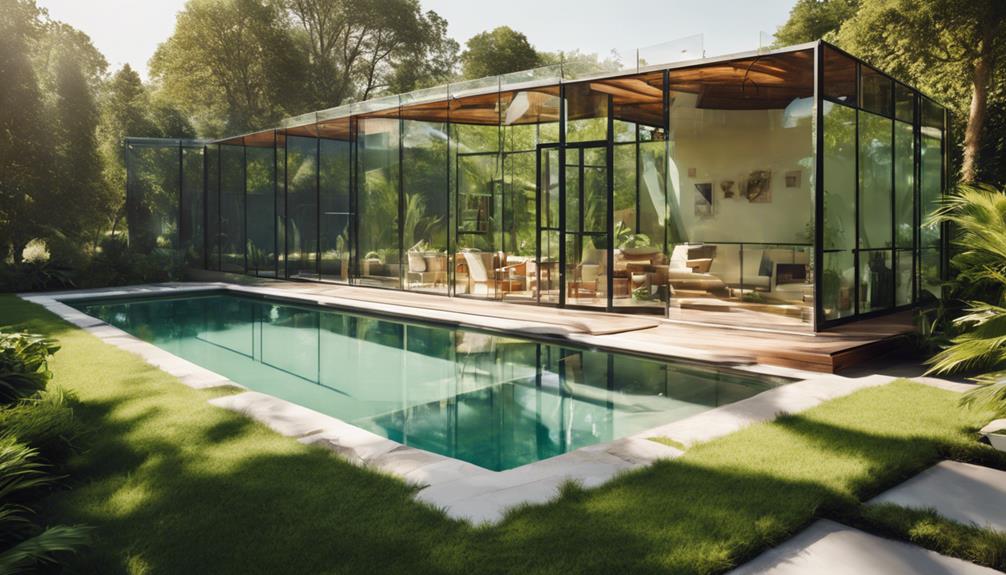
The selection of materials for pool enclosures plays a vital role in their performance, durability, and aesthetic appeal. High-quality aluminum is a popular choice for aluminum pool enclosures due to its lightweight nature and remarkable resistance to rust and corrosion. This guarantees a long lifespan with minimal maintenance, making it an ideal option for those seeking top-quality products for their outdoor living spaces.
Material choices extend beyond aluminum; polycarbonate panels are another excellent option. These panels, ranging in thickness from 3mm to 10mm, offer exceptional strength, impact resistance, and high clarity. Such characteristics make polycarbonate a favored material for enclosure walls, providing both durability and aesthetic appeal.
Extruded aluminum is frequently employed for structural components, offering maintenance-free durability and compatibility with various design elements. This guarantees that the pool screen and other parts of the enclosure remain robust and visually appealing over time.
Understanding local building and environmental needs is significant when selecting materials for pool screens. Confirming the materials can withstand regional weather conditions is essential for long-term performance.
Customization options allow homeowners to tailor their enclosures to their specific preferences, enhancing both functionality and visual harmony in their outdoor living areas.
Maintenance Tips
Choosing the right materials for a pool enclosure is only the first step in guaranteeing its longevity and aesthetic appeal. Effective maintenance practices are vital to preserving both the functionality and visual charm of your enclosure.
Among the foremost maintenance tips is regular cleaning. Utilizing a pressure washer or a mild detergent paired with a soft sponge or cloth can prevent long-term staining and keep your enclosure looking pristine. For tougher stains, a 50/50 water-vinegar solution is highly effective. Make sure these areas are gently scrubbed with soft sponges or cloths to avoid damaging the materials.
After cleaning, it is recommended to rinse thoroughly using a garden hose to remove any detergent residue and debris, which could otherwise compromise the enclosure.
Beyond regular cleaning, periodic maintenance, such as checking for loose screens and confirming proper drainage, is essential. These practices can extend the lifespan of your pool enclosure, safeguarding your investment.
Regular upkeep, including power washing and prompt stain removal, greatly enhances both the aesthetic appeal and the overall functionality of the enclosure. Adhering to these maintenance tips guarantees your pool enclosure remains a beautiful and durable addition to your property.
Installation Costs
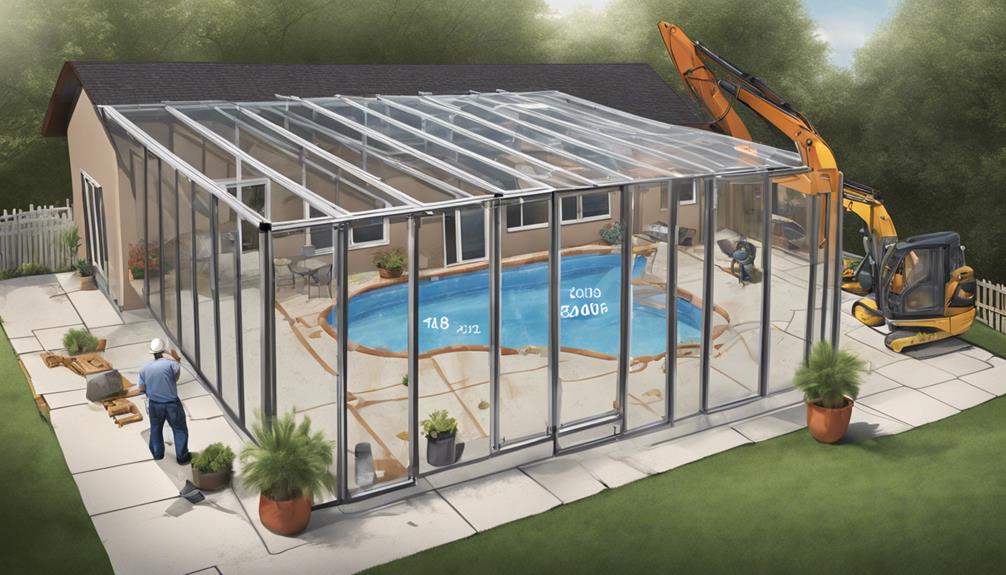
Understanding the factors that influence installation costs for pool enclosures is crucial for effective budgeting and planning. In Florida, the average cost of pool enclosures ranges from $6,000 to $12,000, primarily depending on the size and materials used.
Aluminum frames, a popular choice, typically cost between $5 to $15 per square foot. However, the final installation costs can be greatly impacted by custom design features and specialized screen options.
Additional costs may also arise from building permits, which are often required to comply with local regulations. The installation timeframe averages around 30 business days but can vary based on the complexity of the project and specific permit requirements.
Consequently, it is wise to consult with a reputable service provider to obtain a precise estimate tailored to your specific needs.
For the most accurate pricing, it is advisable to request a free estimate from multiple service providers. This approach guarantees that you account for all potential variables, including the type of enclosure and local market conditions.
Conclusion
In conclusion, understanding the benefits and advantages of pool enclosures, UV protection options, material choices, maintenance tips, and installation costs is essential for making an informed decision. By addressing these key aspects, one can guarantee a thorough approach to selecting a pool enclosure that best suits specific needs and preferences. Remember, “an ounce of prevention is worth a pound of cure,” emphasizing the importance of meticulous research and preparation to achieve long-term satisfaction and functionality.
