
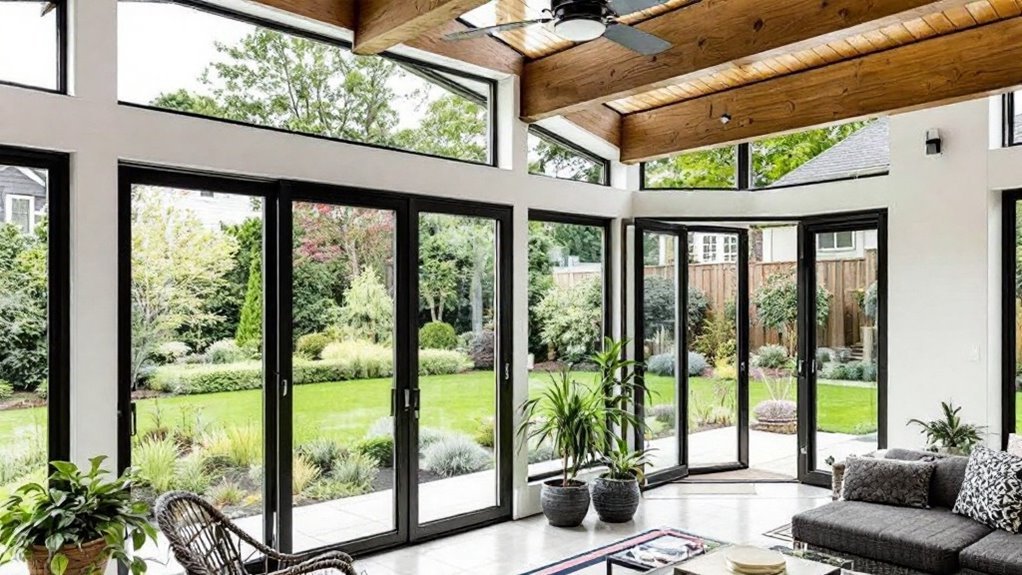
To guarantee your sunroom is a seamless and attractive extension of your home, you need to harmonize its design with your existing architectural style, whether it’s modern, Victorian, or any other style that complements your home. Select materials like energy-efficient double-paned glass, low-E glazing, and high-quality aluminum framing to enhance both aesthetics and energy efficiency. Optimize natural light by orienting the sunroom southward and using floor-to-ceiling windows and light-colored walls. Implement proper insulation, operable vents, and ceiling fans for climate control, and choose furniture and decor that match your sunroom’s style. Regular maintenance and compliance with local regulations will also keep your sunroom looking its best, and exploring these tips further will help you achieve a perfectly integrated sunroom.
Key Takeaways
- Ensure the sunroom complements the existing architectural style for a cohesive look, integrating seamlessly with the home’s design.
- Optimize the sunroom’s orientation, preferably south-facing, to enhance sunlight exposure and energy efficiency.
- Maintain well-manicured landscaping to prevent overgrown or damaged areas that detract from the sunroom’s beauty.
- Use energy-efficient materials like double-paned glass, low E glazing, and solid insulated walls to enhance aesthetics and functionality[BACKGROUND: 2].
- Incorporate strategic window treatments and seasonal adjustments, such as shades and curtains, to control light and temperature effectively[BACKGROUND: 4].
Harmonizing Design and Architecture
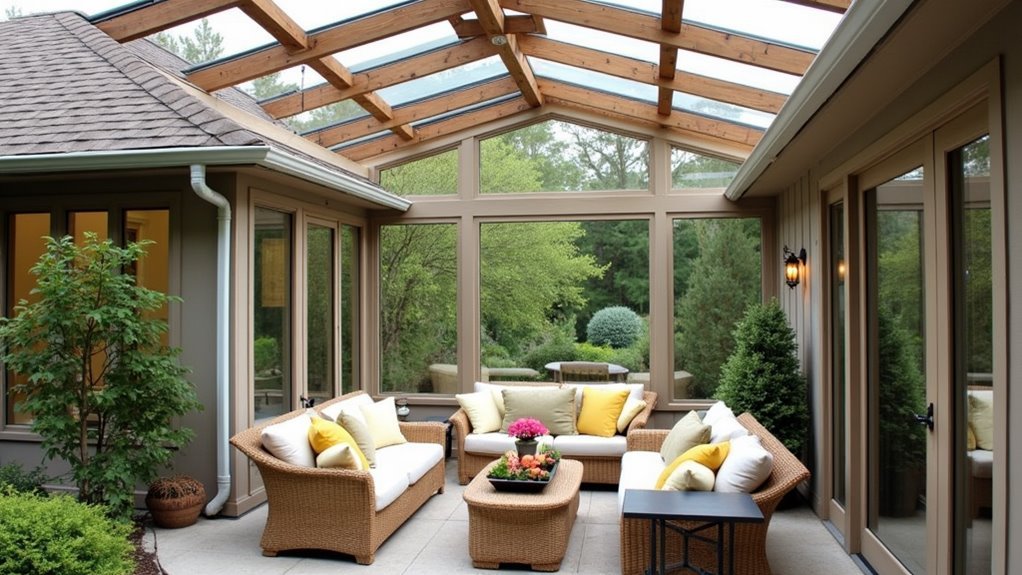
When integrating a sunroom into your home, harmony between design and architecture is paramount. Confirming that the sunroom complements the existing architectural style of your home is vital for maintaining a cohesive look. This means selecting materials and designs that blend seamlessly with your home’s facade, whether it’s using wood or aluminum frames that match or enhance the current structure.
The orientation of the sunroom is also essential; positioning it due south allows for ideal sunlight exposure, boosting energy efficiency and harmonizing with your home’s natural light flow. Incorporating energy-efficient windows is another key aspect. These windows should align with your home’s design to improve insulation, reduce heating and cooling costs, and maintain a seamless appearance.
Proper landscaping around the sunroom is fundamental for creating a natural connection between the indoor space and the outdoor environment. This enhances the overall design harmony and confirms the sunroom doesn’t stand out as an eyesore. With Colorbeam Technology framing, the structure provides superior durability while maintaining modern aesthetic appeal that naturally integrates with existing architecture.
Selecting Appropriate Materials
Selecting the right materials for your sunroom is vital to secure it meets your needs for durability, energy efficiency, and aesthetic appeal.
When it comes to windows, opting for energy-efficient double-paned glass is a must. This type of glass enhances insulation, reducing heating and cooling costs over time. Consider low E or reflective glazing to minimize unwanted solar heat gain while maximizing light entry, guaranteeing a comfortable interior climate.
For the frame and structure, aluminum is a popular choice due to its lightweight and low-maintenance qualities. However, it’s imperative to use high-quality aluminum framing systems, like the Colorbeam Aluminum Framing System, which is designed to withstand extreme weather conditions, including winds over 160 mph.
Unlike traditional aluminum materials, Colorbeam offers structural superiority and durability.
Solid insulated walls, particularly on the east and west sides of the sunroom, can greatly reduce heat loss in winter and heat gain in summer.
Colorbeam wall panels, with their smooth matte finish and array of attractive colors, combine modern aesthetics with extreme durability and insulating value. These panels are designed for exterior exposure, are dent and fade resistant, and feature a solar reflective coating to keep your sunroom cool in the summer.
Cathedral style sunrooms offer dramatic vaulted ceilings that create an open, airy atmosphere perfect for maximizing natural light.
Optimizing Natural Light
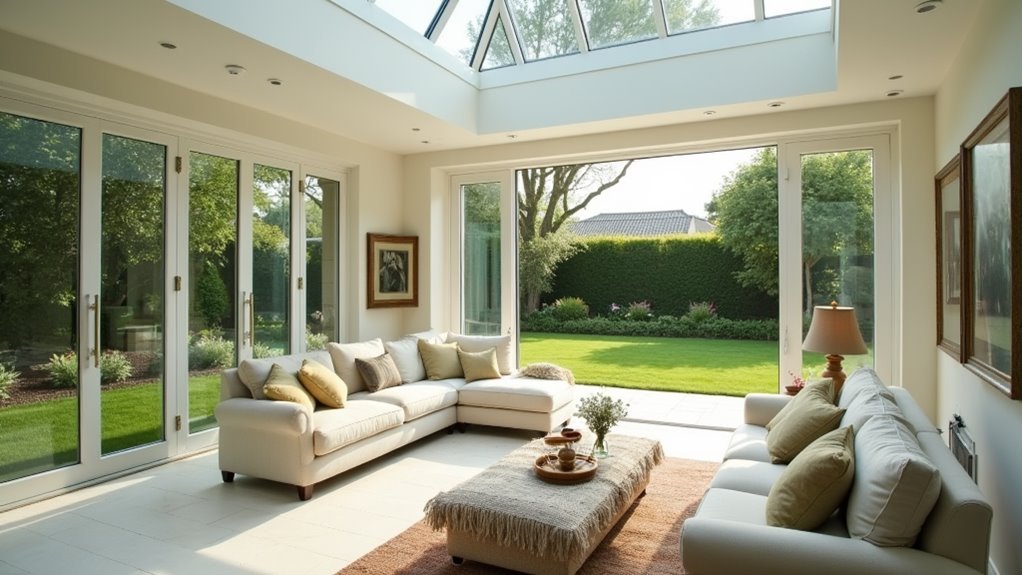
Optimizing natural light in your sunroom is vital for creating a bright, inviting, and energy-efficient space. To design the perfect sunroom project, you need to focus on several key elements that help you maximize natural light intake.
Positioning your sunroom to face south can considerably enhance sunlight exposure, ensuring at least four hours of midday sunlight during the winter months. This orientation maximizes natural light intake, making the space brighter and more welcoming.
Incorporating floor-to-ceiling windows and large openings is essential for increasing the amount of natural light that enters the space. These features reduce the need for artificial lighting during the day, creating a more natural and comfortable environment.
Using light-colored walls and reflective materials in your sunroom design can amplify natural light, making the space appear brighter and more spacious. Additionally, installing operable skylights or sidewall vents can further optimize natural light and ventilation, facilitating a comfortable and airy atmosphere.
Finally, strategic landscaping that minimizes obstructions such as trees or structures helps maintain uninterrupted sunlight access, enhancing the overall brightness of your sunroom.
Modern insulated glass technology provides superior thermal performance while maintaining optimal natural light transmission throughout the year.
Climate Control and Comfort
To guarantee your sunroom remains a comfortable and inviting space throughout the year, effective climate control is fundamental. This starts with the installation of high-quality thermal windows, which considerably enhance insulation and reduce noise, securing comfort regardless of the season.
These windows play a critical role in maintaining consistent temperatures and minimizing heat loss in winter, as well as keeping the space cool during the hottest months.
In addition to thermal windows, proper insulation in the walls, ceilings, and floors is essential. Insulation with R-values ranging from 20 to 50 helps maintain consistent temperatures and minimizes heat loss. This all-encompassing insulation approach guarantees that your sunroom remains a comfortable retreat year-round.
Ventilation is another key aspect of climate control. Incorporating operable vents and ceiling fans promotes natural ventilation, allowing for cross breezes that help regulate temperature and improve air circulation.
For colder months, radiant floor heating can provide consistent warmth while being energy-efficient.
Finally, seasonal adjustments such as window treatments like shades or curtains can effectively control light intensity and heat gain, contributing to a comfortable environment.
Furniture and Decor Choices

When transforming your sunroom into a vibrant and inviting space, the art of furnishing and decorating plays an essential role. To guarantee your sunroom is both functional and aesthetically pleasing, it’s vital to choose the right furniture and decor.
Opt for weather-resistant materials such as wicker or rattan for your furniture. These materials can withstand exposure to sunlight and humidity, assuring durability and comfort. For cushions and upholstery, use outdoor fabrics that enhance longevity and ease of cleaning, making them perfect for a sunroom environment.
Light-colored flooring options like wide-plank wood, stone, or tile can help reflect sunlight and create an airy feel, complementing the overall bright ambiance of your sunroom. Arrange your furniture to foster conversation and relaxation; grouping seating around a central table or creating cozy nooks can greatly enhance the sunroom’s functional appeal.
Adding plants to your sunroom can elevate its decor, creating a vibrant atmosphere that connects the indoor space with the natural surroundings outside. An indoor garden not only purifies the air but also adds a touch of greenery, making your sunroom feel more alive.
Personal artwork and carefully selected decor items can further enhance the space, making it a seamless extension of your home.
Maintaining Your Sunroom
Maintaining your sunroom is essential to guarantee it remains a bright, inviting, and functional space throughout the year. Regular cleaning of the windows and surfaces is vital to maximize sunlight entry and maintain the aesthetic appeal of your sunroom. Make sure you clean these areas frequently to prevent dirt and grime from accumulating.
Inspect the seals and weatherstripping around your windows and doors annually to prevent air leaks. These leaks can lead to increased heating and cooling costs, compromising the efficiency of your heating and cooling system.
Additionally, monitor the landscaping around your sunroom to make certain it complements the overall aesthetic while providing necessary shade or privacy. Overgrown or damaged landscaping can detract from the beauty of your well-designed sunroom.
Make seasonal adjustments by using shades or curtains to control temperature and light intensity. This will enhance your comfort throughout the year.
Conduct routine checks for wear or damage, especially after extreme weather conditions, to make certain the longevity and structural integrity of your sunroom.
Compliance With Local Regulations
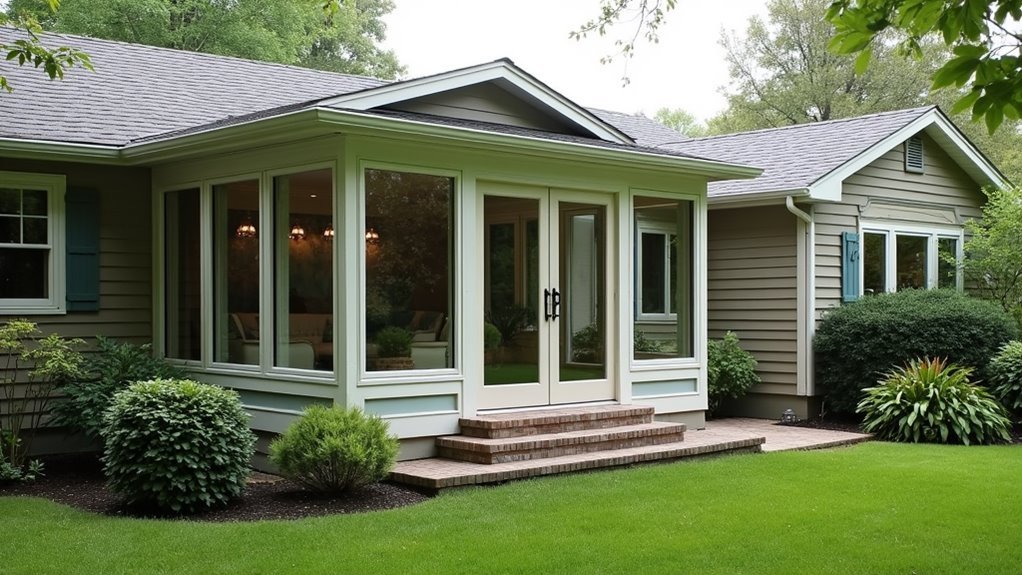
As you guarantee your sunroom remains a bright, inviting, and functional space through regular maintenance, it’s equally important to focus on compliance with local regulations before and during the construction process. Confirming compliance with local regulations is essential to avoid potential issues that could arise after the sunroom is built.
Before constructing your sunroom, it’s imperative to check local zoning laws to verify that the planned structure complies with property use regulations and restrictions. You may need to obtain various permits, such as building permits or occupancy permits, depending on local requirements.
Additionally, many neighborhoods have Homeowners’ Association (HOA) guidelines that dictate design elements, including color, materials, and overall aesthetics, which must be adhered to for approval.
During construction, schedule inspections at key milestones to verify compliance with local building codes and safety standards. These inspections are significant to prevent potential fines or legal issues that could arise from non-compliance.
Failing to comply with local regulations can lead to costly penalties, necessitating modifications or even the removal of the sunroom. As a result, thorough research and adherence to these regulations are paramount to confirm your sunroom is both legally and aesthetically integrated into your property.
Conclusion
By choosing the right materials and a reliable contractor, you can guarantee your sunroom is both functional and a harmonious part of your home. Did you know that a well-designed sunroom can increase your home’s value by up to 10%? This significant boost in property value, combined with the joy of additional natural light and comfort, makes investing in a sunroom a wise decision that enhances both your lifestyle and your home’s appeal.
