
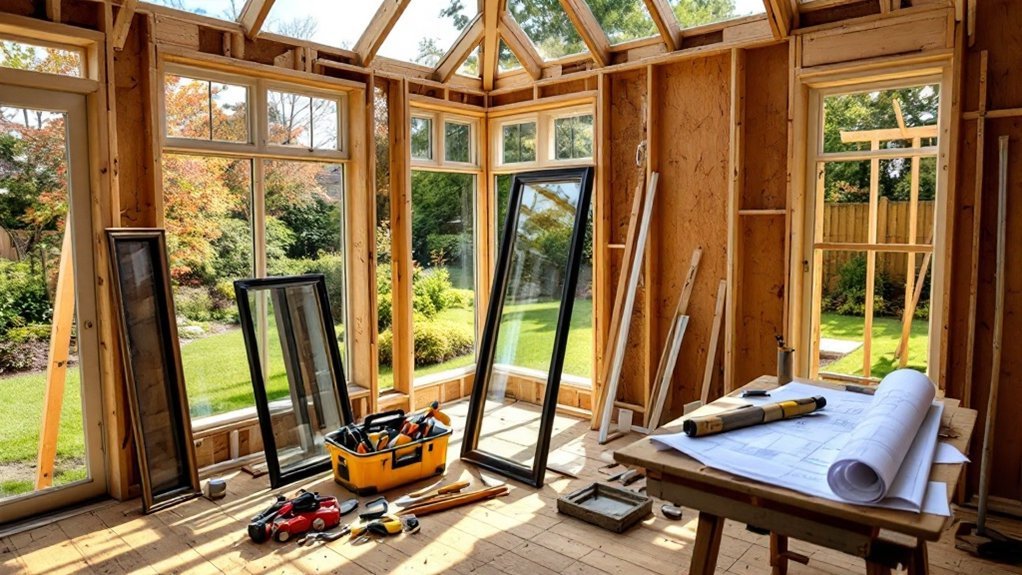
When adding a sunroom, picking the right location is essential; southern exposure‘s great for sunlight, while eastern exposure boosts energy efficiency. Decide on the type, whether it’s a standard, four-season, or greenhouse. Choose materials like vinyl or aluminum for durability. Consider heating and cooling solutions for year-round comfort and set a realistic budget. Hiring a specialist contractor guarantees compliance with codes. Curious about each step? There’s more to explore!
Choose the Right Location for Your Sunroom

When planning your sunroom, choosing the right location is essential to maximizing its benefits. Consider southern exposure for abundant sunlight, which is particularly valuable in northern areas with limited light.
Eastern exposure offers delightful morning sun while keeping afternoon heat at bay, promoting comfort and energy efficiency. However, steer clear of western exposure, as it often results in excessive afternoon heat, raising cooling costs and reducing comfort.
Northern exposure delivers lower light levels and cooler temperatures, which can be a boon in warmer regions but less ideal in cooler ones. Assess local weather patterns and think about shading from nearby trees or structures.
Choosing a sunroom with heat reflecting glass enhances comfort during hot months, ensuring your sunroom remains a pleasant space year-round. This will help you optimize your sunroom’s functionality, ensuring it remains a comfortable and energy-efficient space year-round.
Understand the Different Types of Sunrooms
Although sunrooms come in various forms, understanding the different types will help you select the best one for your needs.
A standard sunroom might offer a simple glassed-in space, but if you’re seeking year-round comfort, a four-season room with climate control is ideal. These rooms provide consistent comfort levels regardless of external weather.
An attached greenhouse, on the other hand, is perfect for those who wish to focus on plant growth, with optimized light, temperature, and humidity control.
Screened-in rooms are budget-friendly, offering fresh air circulation while keeping insects at bay.
To ensure durability and energy efficiency, consider sunrooms that incorporate Colorbeam Technology, which is specifically designed for coastal climates and offers advanced insulation and corrosion resistance.
Each type serves a distinct purpose and design, so consider how they complement your lifestyle and home environment. Choosing wisely guarantees your sunroom enhances your home’s appeal and utility.
Select the Best Materials for Longevity and Aesthetics

Choosing the right type of sunroom is just the beginning; selecting materials that offer both longevity and aesthetic appeal is equally important.
Vinyl is a popular choice due to its affordability, strength, and insulation properties, demanding minimal maintenance.
Aluminum, known for its durability and weather resistance, is perfect for roofs but lacks the insulation of vinyl.
If you’re aiming for a natural look, wood provides aesthetic appeal but requires more upkeep to prevent decay.
Consider incorporating double-glazed glass with Low-E coating to enhance energy efficiency and reduce heating and cooling costs.
Multiwalled vinyl structures offer improved insulation and structural integrity.
For those considering a sunroom in the Gulf Coast area, you might also explore the advantages of patio and pergola combinations to create a versatile and relaxing outdoor space.
Consider Heating and Cooling Options
Planning for heating and cooling options is essential to guarantee your sunroom remains comfortable all year round. Installing an HVAC system can offer precise temperature control, making your space enjoyable in any weather. Ceiling fans are also a great addition, as they help circulate air and provide a cooling breeze during warmer months. Opt for energy-efficient windows with double-pane glass and Low-E coating to enhance insulation and minimize heating and cooling costs. If your sunroom has a southern exposure, you might need additional cooling solutions to manage heat during summer. Proper insulation is critical for maintaining year-round comfort, so consider all these factors during the design phase to make sure your sunroom is a pleasant retreat, regardless of the season. Additionally, hurricane-resistant ColorBeam™ Framing materials can ensure your sunroom withstands strong winds, offering both durability and safety.
Evaluate Your Budget and Financing Options
When you’re considering adding a sunroom, it’s crucial to evaluate your budget and financing options carefully.
Start by estimating the average cost, which ranges from $120 to $300 per square foot, depending on materials and design.
Consider financing options like home equity or personal loans to fund the project without straining your finances.
Remember to include additional expenses like permits, contractor fees, and landscaping, which can add 10-20% to the overall project cost.
Obtain multiple quotes from reputable contractors to understand pricing and secure the best value.
A well-constructed sunroom can increase your home’s value, potentially allowing you to recoup your investment when selling.
Careful planning guarantees your sunroom is both a beautiful and financially sound addition.
Hire a Specialized Sunroom Contractor
After evaluating your budget and financing options, it’s time to focus on selecting the right professional to bring your sunroom vision to life.
When you hire a specialized sunroom contractor, you’re guaranteeing that your project meets local building codes and is built to last. Look for a contractor with a proven track record and good references to assure quality workmanship. Their expertise will help address structural requirements and provide tailored solutions for your unique needs.
Specialized contractors:
- Anticipate and resolve unforeseen issues, like hidden water damage.
- Offer tailored solutions based on varied materials and designs.
- Understand local building codes to guarantee compliance and safety.
- Deliver quality workmanship, assuring durability and longevity.
Choosing the right contractor guarantees your sunroom’s success and long-term enjoyment.
Plan for Maintenance and Durability
To guarantee your sunroom remains a beautiful and functional space, focus on maintenance and durability from the start.
Select durable materials like multiwalled vinyl or aluminum to reduce long-term upkeep. Energy-efficient windows with double-pane glass and Low-E coatings help maintain comfort, minimizing maintenance from temperature fluctuations and condensation.
Regular cleaning of windows and surfaces prevents dirt buildup, ensuring your sunroom’s appeal isn’t diminished. Implement UV protection for furniture and decor to prevent fading from prolonged sun exposure.
Don’t skip seasonal checks for structural integrity; inspect seals and joints to catch potential issues before they escalate into costly repairs.
Frequently Asked Questions
What Is the Disadvantage of Sunroom?
You’re considering a sunroom, but remember the downsides: maintenance demands, energy efficiency challenges, and design options tied to climate. Building materials and local regulations affect resale value, while seasonal use, construction timeline, and aesthetic integration require careful planning.
How Much Does It Cost to Add a 12X12 Sunroom?
Imagine stepping into your dream sunroom. The costs vary: $15,000-$40,000 depending on sunroom materials. Consider installation costs, design options, and energy efficiency. Factor in zoning regulations, maintenance requirements, and DIY considerations. Financing options can boost resale value.
How Much Does It Cost to Build a 20X20 Sunroom?
You’ll find building a 20×20 sunroom costs between $48,000 to $120,000. Consider sunroom materials, cost estimates, and local regulations. Discuss insulation requirements, heating solutions, and lighting choices with your contractor to guarantee a seamless construction timeline.
Do You Need Permission for a Sunroom?
You’ll need to check local ordinances and building codes before starting your sunroom. Consider zoning regulations, property lines, and homeowner association rules. The approval process involves construction permits, design considerations, energy efficiency, and selecting appropriate sunroom materials.
Conclusion
Imagine your sunroom as a bridge between your home and nature, a sanctuary where seasons dance in harmony. By choosing the right materials, like Colorbeam’s resilient armor, you’re crafting a fortress against time’s relentless march. As you navigate this journey, let your heart be the compass, guiding you to wise investments and skilled hands. In this haven, comfort whispers through every beam, promising warmth in winter’s chill and cool respite during summer’s fiery embrace.
