

If you want a pergola that lasts the longest with the least hassle, choose aluminum. It resists rust, rot, and severe weather far better than wood or vinyl, so you won’t have to worry about constant maintenance. Aluminum pergolas handle high winds and harsh climates, outlasting other materials by years. Wood looks beautiful but needs a lot of upkeep, and vinyl may fade or crack over time. Curious about how to keep any pergola in top shape? There’s more you should know.
Comparing the Durability of Wood, Vinyl, and Aluminum Pergolas
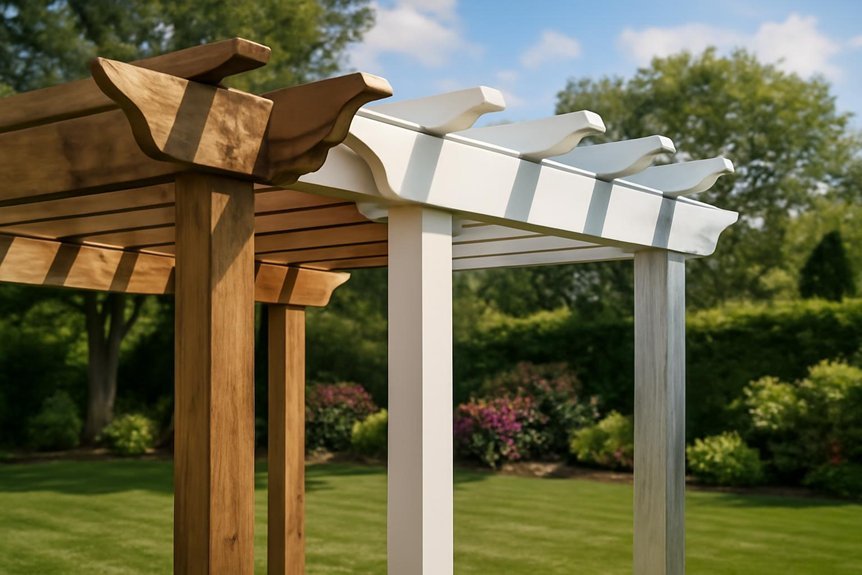
When choosing a pergola, you’ll want to contemplate how each material holds up over time.
If longevity and minimal maintenance requirements top your list, aluminum pergolas stand out among outdoor structures. They’re well-suited for harsh weather conditions, resisting rust and decay even after years of exposure to the elements.
Vinyl pergolas also deliver good durability; they resist rot and insect damage, but with extended sun or extreme weather, you may notice some fading or brittleness.
In the classic wood vs aluminum debate, wooden pergolas offer unmatched natural beauty but demand ongoing care—regular staining and sealing—to ward off rot and decay.
Ultimately, pergola materials have different strengths, but aluminum consistently outlasts wood and vinyl, especially if you face tough climates. Additionally, choosing factory-direct aluminum options can offer superior materials and competitive pricing, helping ensure durability over time.
Key Factors That Affect Pergola Lifespan
While material choice lays the foundation for pergola longevity, several other factors can dramatically impact how long your structure lasts.
You’ll need to think about both the pergola material and your local climate conditions. For example, wood offers classic appeal but struggles with rot resistance in humid areas, which can shorten its lifespan. Aluminum typically handles corrosion and harsh weather far better.
Extreme UV exposure can cause wood and vinyl to fade or become brittle—so if you live somewhere sunny, material and location selection matter more.
Snow load is critical too; a pergola rated for greater weight, especially aluminum options, lasts longer if winters are harsh.
Finally, regular inspections help catch small issues early and guarantee maintenance needs are met before they threaten your pergola’s durability.
In Florida’s coastal climate, pergolas built with Titan’s Colorbeam Technology benefit from thicker, corrosion-resistant framing designed to withstand high winds and reduce maintenance over time.
How to Maintain Your Pergola for Maximum Longevity
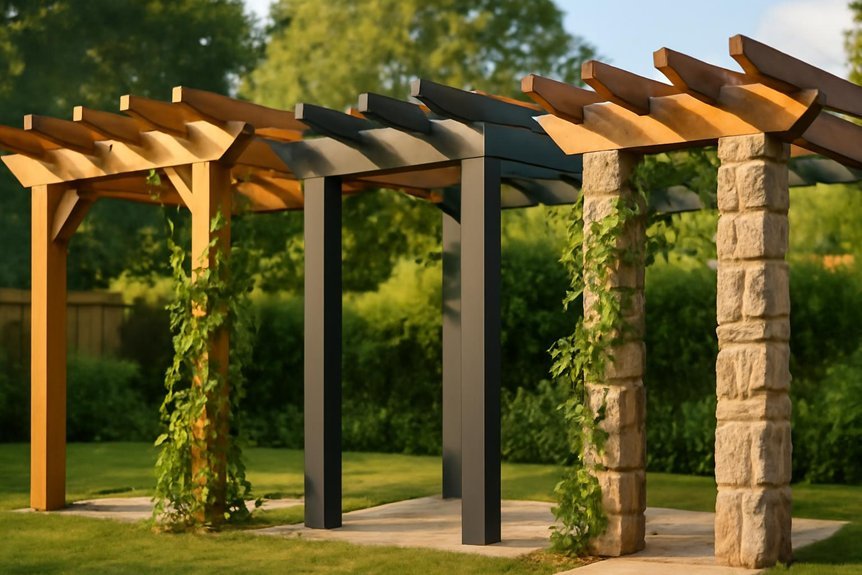
Although the right material gives your pergola a strong start, consistent care is the real secret to making it last. To extend the lifespan of your outdoor structure, focus on its unique maintenance needs.
For a wood pergola, regular maintenance like sanding and staining protects against rot, letting it stay long lasting for decades. A vinyl pergola is low maintenance but needs annual inspections for UV damage and routine cleaning to stay in top shape.
Even if you want low maintenance, don’t skip periodic inspections—catching structural issues or pests early will protect your investment. Clean aluminum pergolas with mild detergent and check for corrosion.
For louvered models, maintain their moving parts and electronics. Prioritizing care means you’ll enjoy your pergola for many years.
For screen enclosures near your pergola, consider hurricane-resistant ColorBeam framing, which offers wind load capacity up to 160 mph for enhanced durability.
Conclusion
When you’re choosing a pergola, think about how much maintenance you’re willing to do and the look you want. Aluminum pergolas typically last the longest with the least upkeep, while vinyl offers a good balance of durability and easy care. Wood looks classic but demands more attention to stay strong and beautiful. Whichever material you pick, a little regular care will help you enjoy your pergola for years to come. Make your choice with confidence!
