
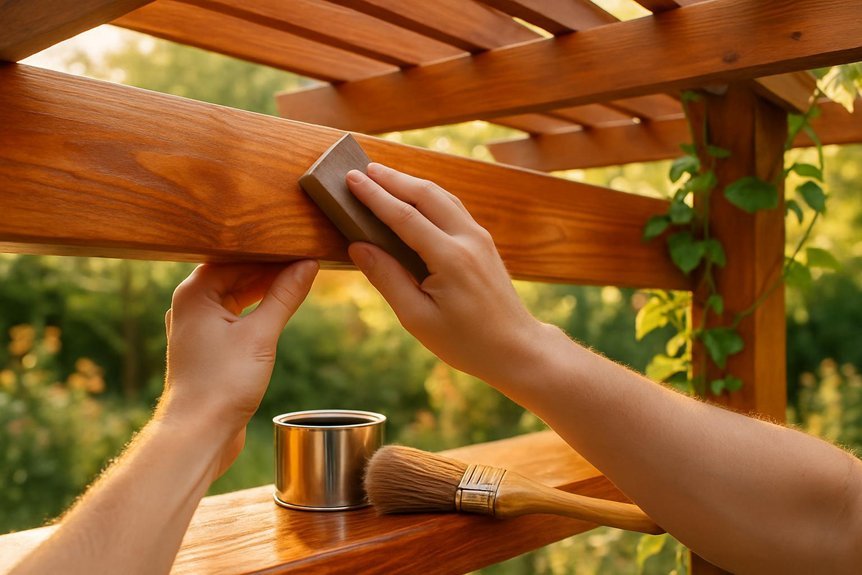
To keep your wood pergola in top shape, sweep off debris regularly and wash it with mild detergent, avoiding harsh chemicals. Inspect yearly for rot, insect damage, and loose fasteners, tightening or repairing as needed. Apply a quality sealant and stain every 1–2 years to protect against weather and UV damage. Manage vines so they don’t stress the structure. These simple steps will preserve your pergola’s beauty—stick around for more tips on protective treatments and seasonal care.
How to Effectively Clean Your Wood Pergola
When you’re ready to clean your wood pergola, start by gently sweeping away loose dirt and debris with a soft-bristled brush to prevent scratches and surface damage.
For a deeper cleaning, mix a mild detergent with warm water and use a sponge to scrub the surface, steering clear of harsh chemicals that can harm the wood.
Once finished, rinse thoroughly with a garden hose to wash away all soap residue and avoid streaks.
To tackle mildew or stubborn stains, apply a diluted bleach-water solution carefully, ensuring you protect nearby plants.
During cleaning, always perform regular inspections for rot, insect activity, or loose fasteners, so you can address issues promptly and keep your pergola safe and beautiful for years to come.
For long-term protection, consider upgrading to a patio cover that offers shade and rain protection, such as a vaulted cathedral or studio roof style, which can reduce weathering and extend the life of your pergola.
Protecting Your Pergola With Stain and Sealant
Although regular cleaning keeps your pergola looking fresh, applying stain and sealant is essential for long-lasting protection against weather, moisture, and pests. To enhance durability and appearance, use a translucent oil-based wood stain every 3-5 years. This not only protects against UV damage but also allows the natural wood grain to show. Within six months of installation, apply a weather-resistant sealant, repeating yearly to prevent rot and provide ideal moisture protection. When you apply the product, use a bristle brush to guarantee all surfaces are thoroughly covered, blocking water absorption. Regularly inspect your pergola for signs of wear and address any faded or damaged areas right away. This proactive care keeps your pergola resilient and beautiful through every season. For added peace of mind, consider structures built with Colorbeam Technology, which are specifically engineered for durability in harsh coastal climates.
Addressing Common Damages and Repairs
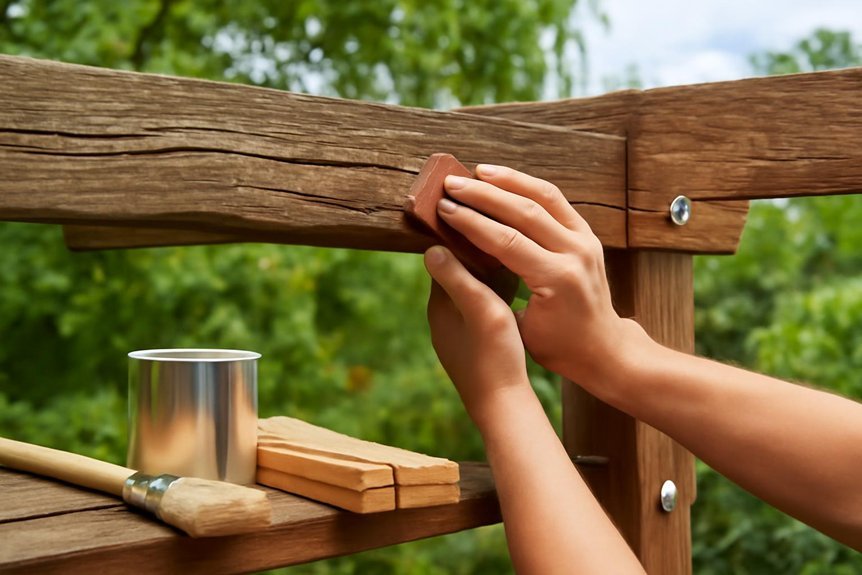
After you’ve sealed and stained your pergola, ongoing maintenance involves more than just routine touch-ups; it’s also important to watch for everyday wear and tear that can compromise its structure.
Regular maintenance of wood pergolas means you should inspect the beams and joints for rot or mildew. Address these quickly, since untreated rot risks your pergola’s structural integrity.
Clean mildew using a bristle brush, warm soapy water, and, for stubborn spots, a diluted bleach-water solution—always rinse thoroughly.
If you notice small cracks or splits, repair them with exterior wood filler; let it dry before sanding and restaining.
Don’t forget to check for loose fasteners; tighten or replace them so the framework stays secure.
After repairs, reapply a weather-resistant sealant for protection.
For enhanced durability in harsher climates, consider upgrading adjacent structures or future add-ons with hurricane-resistant ColorBeam™ framing, which is designed to withstand wind loads up to 160 mph.
Seasonal Inspection and Maintenance Checklist
Because seasonal changes can affect your wood pergola’s durability, it’s smart to perform a thorough inspection and maintenance routine at least once a year.
Start your annual inspection by carefully checking for rot, insect damage, and the effectiveness of your weather-resistant sealant or stain.
Examine all fasteners and base plates for any loose screws or instability, tightening them as needed to prevent structural problems.
Incorporate regular cleaning into your routine by using a soft brush or cloth bi-annually to remove dirt buildup and reduce the risk of mildew accumulation.
If necessary, use a mild detergent for stubborn spots.
To further enhance longevity, consider reapplying a weather-resistant sealant every one to two years, based on your local climate and the wear you observe during your seasonal inspection.
Managing Vines and Accessories for Longevity
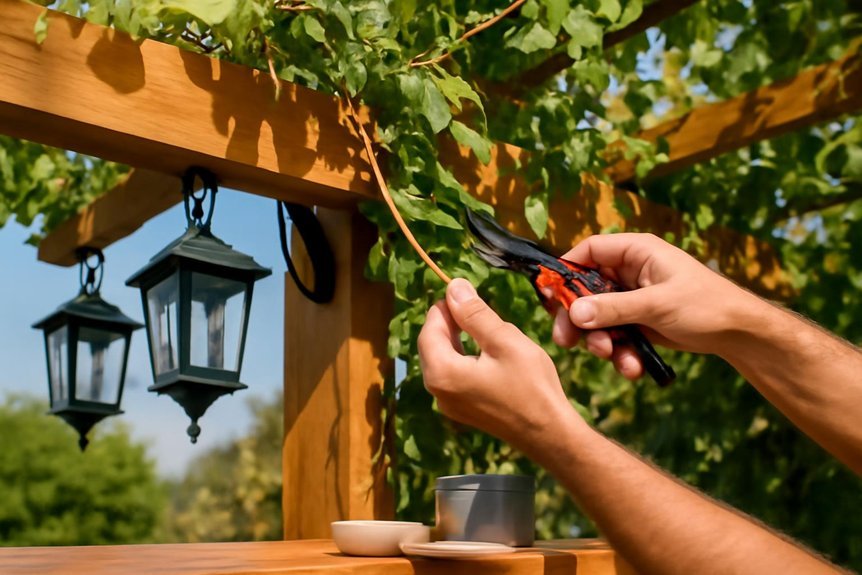
If you want your pergola to last, it’s essential to manage vines and accessories thoughtfully. Start by selecting lightweight climbing plants; they provide aesthetic enhancement without adding excessive weight, helping prevent damage to the structure.
Regularly trim and manage vines—ideally twice a year—to control growth and avoid undue pressure that leads to structural stress. Periodically check that vines aren’t wrapping around beams or joints; this makes it much easier to inspect and maintain your pergola long-term.
Don’t let plant growth obscure crucial parts, as clear visibility allows for timely repairs. Use planter boxes or hanging baskets to enjoy lush greenery while keeping the pergola’s weight manageable.
Thoughtful managing of vines and accessories considerably boosts the longevity and integrity of your outdoor retreat.
Conclusion
With regular care, your wood pergola will stay beautiful and sturdy for years. By cleaning it often, sealing and staining as needed, addressing repairs quickly, and checking everything seasonally, you’ll prevent bigger issues down the road. Don’t forget to manage vines and any accessories so they don’t cause unexpected damage. Consistent maintenance guarantees your pergola remains a welcoming, safe oasis in your yard—so you can relax and enjoy it through every season.
