
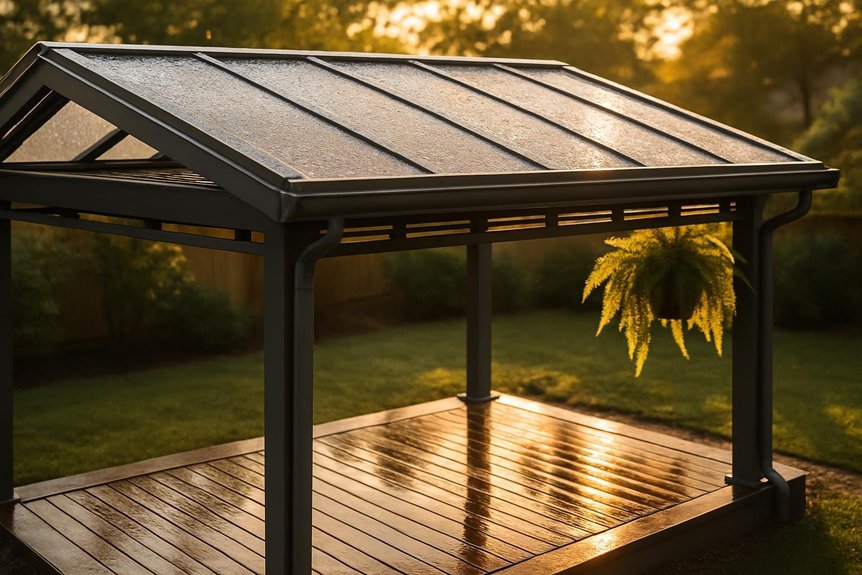
To stop pergola condensation, start by choosing breathable materials like open-weave fabrics or slatted roofs for improved airflow. Position your pergola to catch prevailing breezes and use materials that resist moisture, like treated wood or aluminum. Strategic openings or adjustable louvers can optimize ventilation, keeping moisture at bay. Regular checks and cleaning guarantee no mold or water build-up. Dive further to discover more strategies for creating a condensation-free outdoor space.
Understanding the Causes of Pergola Condensation

When trying to tackle pergola condensation, it’s vital to first grasp what causes this common issue.
Condensation factors primarily include temperature differences between the pergola’s surface and the surrounding air. Warm, moist air cools against the pergola’s cooler surfaces, resulting in water droplets forming.
Recognizing how climate impact plays a role is essential as well. In areas with high humidity, condensation tends to be more frequent and severe. If you live in a region with significant temperature fluctuations, your pergola might experience more condensation due to rapid cooling at night.
Using durable, factory-direct materials can reduce moisture buildup by improving thermal performance and preventing rot in structural elements like durable materials.
Selecting the Right Materials for Improved Airflow
Having identified the causes of pergola condensation, let’s explore how selecting the right materials can improve airflow and mitigate this issue.
Opting for breathable material types like open-weave fabrics or lattice panels can greatly enhance ventilation. These options allow air to circulate freely, reducing moisture buildup. Additionally, consider using materials like treated wood or aluminum that resist moisture absorption.
When it comes to airflow designs, think about integrating slatted roofs or adjustable louvers. These can be adjusted to optimize airflow according to weather conditions. Using durable, low-maintenance framing such as Colorbeam patio covers can also improve ventilation while resisting coastal weather impacts.
Implementing Strategic Ventilation Openings
How can strategic ventilation openings transform your pergola experience? They play a vital role in minimizing condensation and enhancing comfort.
By focusing on a thoughtful ventilation design, you can optimize airflow and create a more inviting outdoor space. Begin by evaluating your pergola’s current setup. Identify areas where air might be trapped or stagnant, then strategically place openings to encourage movement.
Consider incorporating adjustable vents or louvers that allow you to control airflow as needed. This approach not only reduces condensation but also boosts air quality and temperature regulation.
With proper airflow optimization, your pergola becomes a haven, free from dampness and discomfort. By implementing these openings, you’re taking a significant step toward a more enjoyable, condensation-free outdoor experience.
Incorporating Natural Ventilation Techniques
While optimizing your pergola’s airflow, incorporating natural ventilation techniques can greatly enhance your outdoor experience.
Start by designing your pergola with slatted or louvered roofing. This allows air to circulate freely, maintaining natural airflow and reducing condensation. Positioning the pergola to take advantage of prevailing breezes also improves ventilation.
Consider the surrounding landscape; strategically placed plants or trees can guide airflow, enhancing the cooling effect while adding to your design aesthetics.
Using lightweight, breathable materials like bamboo or shade cloth for side panels can also improve air circulation. These materials don’t just look good; they help keep your space cool and dry.
Regular Maintenance Practices to Prevent Moisture Build-up
To keep your pergola free of moisture build-up, regular maintenance is key. Establishing effective cleaning schedules and moisture control measures will help preserve your outdoor space.
Here’s how you can maintain your pergola:
- Inspect Regularly: Check for signs of moisture or damage, like mold or mildew, at least once a month. Early detection can prevent bigger issues.
- Clean Thoroughly: Use a gentle detergent and water to clean surfaces. This removes dirt that can trap moisture, fostering mold growth.
- Seal and Treat: Apply a suitable sealant to wooden parts annually. This protective layer helps prevent water absorption.
- Ensure Drainage: Keep gutters and drainage systems clear of debris to avoid water pooling around your pergola.
Frequently Asked Questions
How Do Weather Conditions Affect Pergola Condensation?
Think of pergola condensation as a dance with the weather. When humidity levels rise and temperature fluctuations occur, moisture gathers on surfaces. You can’t control the weather, but understanding its rhythm helps manage condensation.
Can Pergola Insulation Help Reduce Condensation Issues?
Yes, you can reduce condensation issues by using insulation materials. They help by moderating temperature differences, which are condensation causes. Properly insulating your pergola minimizes moisture buildup, keeping your outdoor space dry and comfortable.
What Role Do Plants Play in Pergola Moisture Levels?
Plants can considerably influence pergola moisture levels. Position them strategically to maximize their moisture absorption capabilities. By doing so, you’ll help reduce condensation and create a more comfortable, dry environment under your pergola.
Are There Specific Designs That Minimize Condensation?
Imagine waking up to no droplets overhead. Yes, specific designs do that! Focus on strategic design features like angled slats and open sides. They maximize airflow management, reducing condensation effectively. You’ll enjoy a dry pergola experience!
How Does Pergola Orientation Impact Ventilation Efficiency?
Choose a pergola orientation that maximizes sunlight and wind flow. Positioning it with ventilation angles aligned to prevailing winds enhances ventilation efficiency. This orientation benefits by reducing moisture buildup and preventing condensation effectively.
