
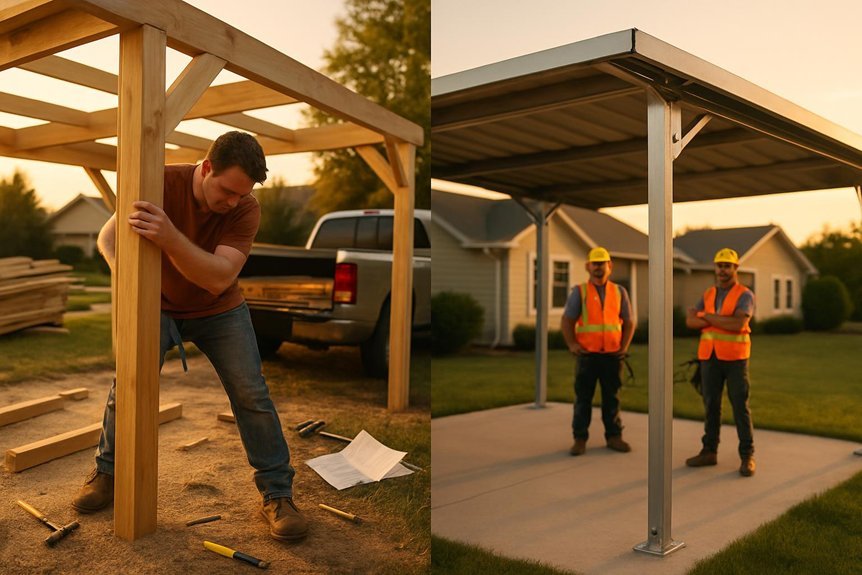
Building your own carport can save labor costs and let you customize, but you’ll need skills in carpentry and time to commit. DIY gives you material choice, but might lack the professional touch in quality and durability. Hiring professionals guarantees expertise and quicker construction, although potentially limiting initial design choices. Contractors often use high-quality materials and offer structural integrity. Ultimately, deciding between DIY and hiring a pro depends on your priorities for cost, time, quality, and customization. Explore further to find out which path suits your needs best.
Cost Considerations
When deciding between a DIY carport and hiring a professional, cost is a major factor to weigh. If you’re working within tight budget constraints, building a carport yourself might seem appealing. You can save on labor costs, which often constitute a significant portion of a professional installation.
However, don’t overlook material expenses. You’ll need to budget for quality materials to guarantee durability, which can add up quickly.
On the flip side, hiring a professional might initially seem more expensive, but it often includes the cost of materials and any necessary permits. A contractor might also have access to wholesale prices, slightly easing material expenses.
Carefully evaluate your budget constraints and consider whether potential savings outweigh the convenience and expertise a professional offers. Hiring a pro can also provide access to factory direct pricing and higher-quality materials that improve long-term value.
Skill and Experience Requirements
Beyond budget considerations, your skills and experience play a significant role in deciding between a DIY carport and hiring a professional. Conducting a skill evaluation helps determine if your experience level aligns with the demands of building a carport.
If you’re comfortable with tools and construction basics, a DIY project might be right for you. However, if your experience is limited, hiring a professional guarantees a quality build.
Consider these factors when evaluating your readiness:
- Technical Skills: Do you have the necessary carpentry skills and knowledge of local building codes?
- Problem-Solving: Can you troubleshoot unexpected issues during construction?
- Tool Proficiency: Are you comfortable using power tools safely and effectively?
Titan Sunrooms offers professional installation and support from Titan Certified Craftsmen to ensure quality workmanship and adherence to building regulations.
Time and Effort Involved
Building a carport involves more than just money; it also demands a considerable investment of time and effort.
If you choose the DIY route, prepare for a substantial time commitment. You’ll need to plan your project timeline carefully, considering factors like weather conditions and material availability.
You’ll likely spend weekends or evenings on construction, potentially extending the project timeline if unexpected issues arise.
On the other hand, hiring professionals can greatly reduce your time involvement.
Pros handle everything from permits to construction, adhering to a set project timeline. This means you can focus on other priorities while the experts work.
However, scheduling with contractors may require some flexibility on your part, so plan accordingly to guarantee smooth progress.
Quality and Durability
While considering the quality and durability of a carport, evaluating the construction method is essential.
With a DIY approach, you’re in charge of material selection, which can be both an advantage and a risk. You need to carefully choose materials that offer strong weather resistance to guarantee longevity.
On the other hand, professional installers often have access to high-quality materials and understand local weather conditions, enhancing the carport’s durability.
- Material Selection: Opt for materials like galvanized steel or treated wood to withstand various weather conditions.
- Weather Resistance: Professionals typically use materials designed to resist corrosion, moisture, and UV damage.
- Construction Expertise: Pros have the skills to build a structurally sound carport, while DIY projects might lack the same level of precision.
Customization and Design Options
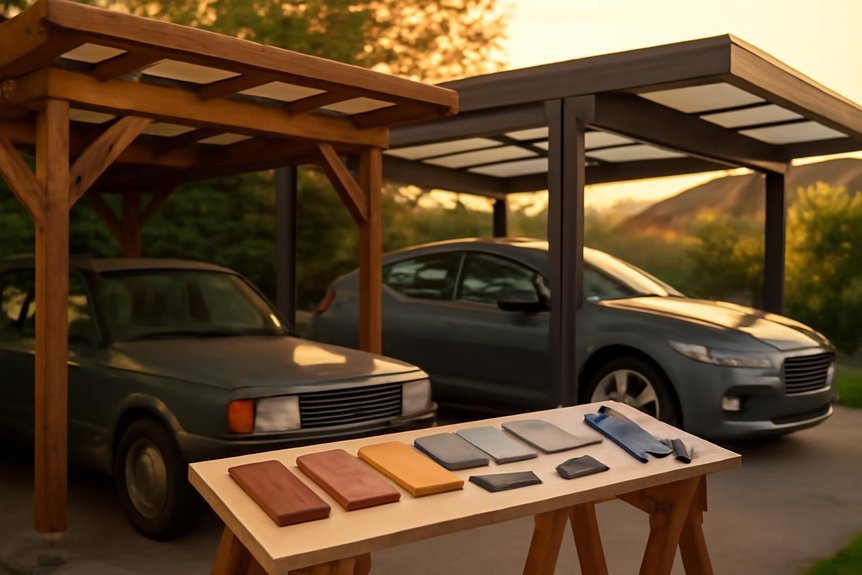
When it comes to customization and design options, choosing between a DIY carport and a professional installation can greatly impact the final look of your structure.
If you opt for a DIY approach, you’ll have more design flexibility. You can personalize every detail, from materials to colors, ensuring your carport fits your home’s style. However, this requires a good eye for design and the ability to execute your vision.
On the other hand, hiring professionals may limit your aesthetic choices initially, but they bring expertise in creating cohesive and polished designs. They can offer suggestions you mightn’t have considered, balancing creativity with practicality.
Ultimately, whether you prioritize personalized design or expert guidance will determine the best path for your carport project.
Frequently Asked Questions
How Do Weather Conditions Affect DIY and Pro Carports?
You might think DIY carports laugh in the face of storms, but weather resistance often whispers, “Try again.” Pro carports, though, chuckle at seasonal considerations and stand strong, providing shelter without breaking a sweat or your patience.
What Maintenance Is Required for Carports?
You should perform regular inspections and establish cleaning schedules for your carport. Check for damage, rust, or wear. Clean surfaces to prevent debris buildup, ensuring the structure’s longevity and reliability throughout different weather conditions.
Are There Environmental Benefits to Choosing a DIY or Pro Carport?
Yes, there are environmental benefits. DIY carports let you manage resources sustainably, choosing eco-friendly materials. Pro installations often use efficient techniques, minimizing waste. Both options improve sustainability factors if you prioritize resource management and responsible practices.
How Does Carport Installation Impact Property Value?
Installing a carport can boost your property’s appreciation and enhance resale potential. A well-executed carport provides additional covered parking, appealing to potential buyers, and increasing your property’s overall attractiveness and functionality, ultimately raising its market value.
What Are the Common Materials Used in Carport Construction?
In carport construction, the materials are as varied as the stars in the sky. You’ll find wood materials, metal structures, concrete bases, and fabric coverings commonly used, each offering unique durability and aesthetic options for your space.
