
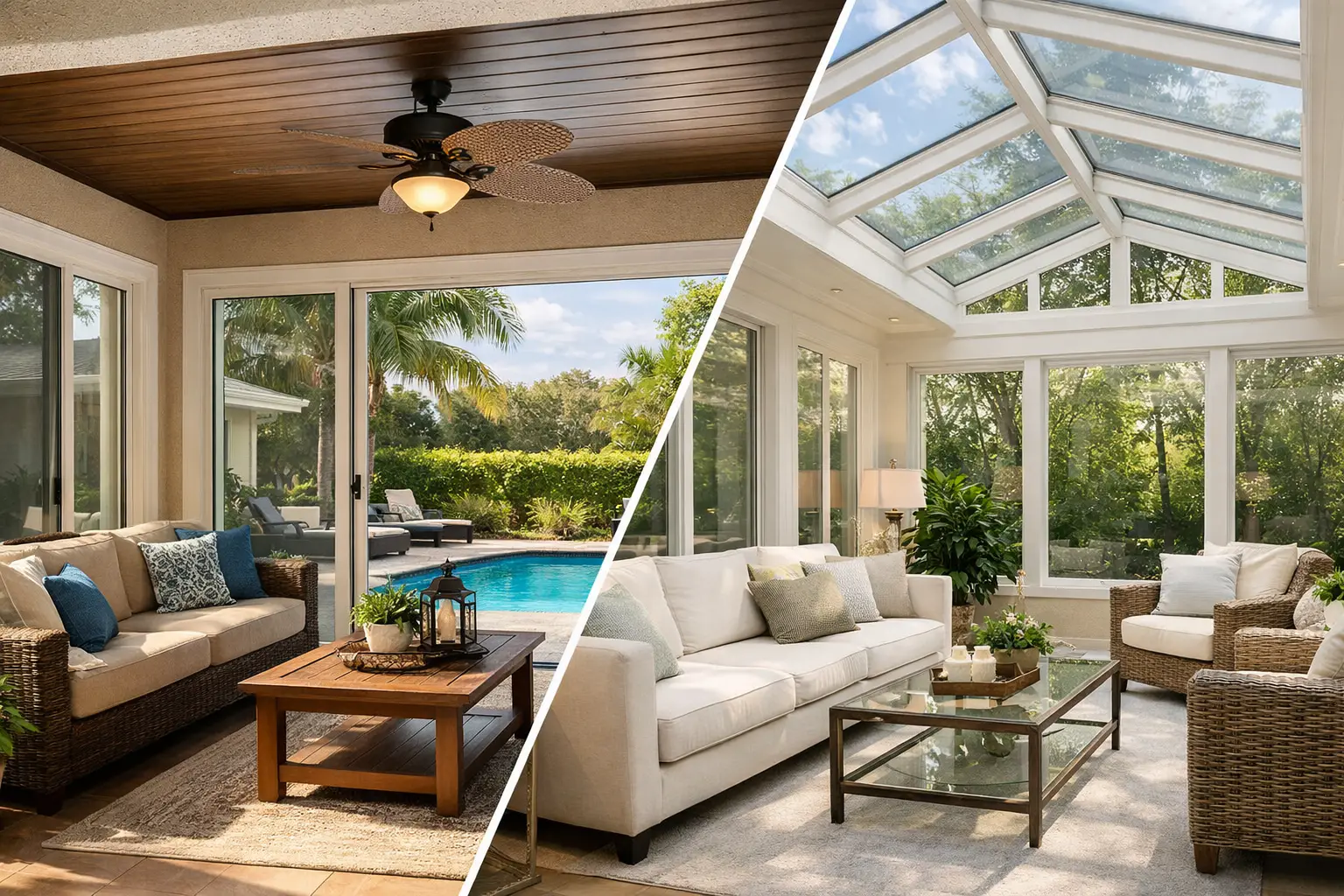
If you live on the Gulf Coast, this is not a decorating question. Florida room vs sunroom is really a question about heat, storms, glare, moisture, and how much of the year you want that space to feel comfortable. The right choice can give you a bright, useful extension of your home. The wrong one can leave you with a room that looks good in photos but sits empty for half the summer.
Homeowners often use the two terms like they mean the same thing. Sometimes builders do too. But in practice, a Florida room and a sunroom can be very different spaces, especially in a climate where heavy rain, salt air, and intense sun are part of daily life. If you are planning an addition in Florida or nearby Gulf Coast markets, the distinction matters.
Florida room vs sunroom: the basic difference
A Florida room is usually a more casual, breezy space designed to connect you to the outdoors while still giving you some protection from bugs, light rain, and direct sun. In many homes, that means large screened areas, lighter enclosure systems, or partially enclosed living space that feels closer to a patio than a fully conditioned room.
A sunroom is typically a more enclosed structure with expansive glass, stronger framing, and a tighter building envelope. It is built to bring in natural light while offering greater protection from weather and better control over temperature. Depending on the design, a sunroom may function more like an extension of the interior than a transitional outdoor room.
That is the simple version. The real answer is less about labels and more about how the room is built.
Why the name matters less than the structure
In Florida, plenty of homeowners ask for a Florida room when they really want a glass enclosure with year-round comfort. Others ask for a sunroom when what they actually need is a screened room with shade and airflow. The label is secondary. The construction details tell you what the room will actually do.
Glass percentage, framing strength, roof system, ventilation, and insulation all affect the experience. So does code compliance. In coastal and high-wind areas, you cannot treat an enclosure like a light backyard accessory. It needs to be engineered for local conditions, built to shed water correctly, and strong enough to handle weather that changes fast.
That is where quality separates itself. A well-built enclosure is not just prettier on day one. It holds up better, feels better to use, and gives you more confidence when the forecast turns rough.
What most people picture as a Florida room
For many homeowners, a Florida room means a bright, relaxed area for morning coffee, casual seating, or overflow space when family visits. It may have screens, vinyl windows, or a mix of enclosure materials. It usually leans toward outdoor living, even if it has furniture and finished flooring.
The appeal is easy to understand. It can feel open, less formal, and more affordable than a fully enclosed glass room. It is a good fit if your main goal is enjoying fresh air with more comfort than an uncovered patio can offer.
The trade-off is climate control. During the hottest months, a lighter enclosure may still be hot and humid. During pollen season, windy days, or heavy rain, you may use it less than expected.
What most people picture as a sunroom
A sunroom usually means more glass, more enclosure, and more protection. It is designed to let in daylight without leaving you fully exposed to the elements. When built properly, it becomes a true expansion of the home rather than a nice-weather add-on.
This is the better fit for homeowners who want a space they can use for dining, reading, entertaining, hobbies, or quiet everyday living. A properly designed sunroom can support a wider range of furniture, finishes, and seasonal use. It also tends to feel more integrated with the rest of the house.
Of course, more enclosure typically means a higher investment up front. But if the room actually gets used week after week instead of a few weekends a year, the value equation changes.
Climate is the deciding factor on the Gulf Coast
A Florida room might sound like the obvious choice in Florida. But the climate here is exactly why many homeowners end up preferring a stronger, better-sealed sunroom.
Summer heat is intense. Afternoon storms are common. Salt air can wear down inferior materials. UV exposure is relentless. If your enclosure is built with weak framing, dated aluminum, or roof panels that do little to control heat gain, you will feel those limitations quickly.
That is why structure and materials matter so much. Stronger framing systems, better roof designs, and tighter weather resistance are not luxury features in this region. They are practical necessities. Homeowners who build for looks alone often end up rebuilding for performance later.
Comfort: open-air feel or controlled living space?
The biggest difference in the florida room vs sunroom decision is how you want the room to live on a daily basis.
If you want breezes, a lighter outdoor feel, and a casual transition from patio to covered space, a Florida room can make sense. It keeps you closer to the outdoors, and for some families that is exactly the point. It is especially appealing if you already spend a lot of time outside and simply want shade, bug protection, and a cleaner place to relax.
If you want a room that feels dependable in more weather conditions, a sunroom usually wins. It gives you better protection from heat, rain, and wind-driven weather while still bringing in plenty of daylight. That flexibility matters when you want the space to function as part of everyday life instead of only during mild conditions.
For retirees, families, and homeowners who entertain often, that difference is significant. A room you can count on tends to become one of the most used areas of the home.
Cost depends on what you are really buying
Many people assume a Florida room is always the budget option and a sunroom is always the premium one. Broadly speaking, that can be true. But cost should be measured against performance, lifespan, and use.
A lower-cost enclosure made with lighter materials may save money at the start, but those savings can disappear if the space is uncomfortable, vulnerable to wear, or built with weaker systems that do not age well in coastal conditions. On the other hand, a well-engineered sunroom with stronger materials and better weather resistance often delivers more real value over time.
The smart question is not just, “What is cheaper?” It is, “What am I getting for the investment?” A room that handles the climate, looks upscale, and stays attractive for years is usually the better buy than one that cuts corners where you cannot afford them.
Materials make or break the project
This is where many homeowners get surprised. Two rooms may look similar in a brochure, yet perform very differently once exposed to real Florida weather.
Framing strength matters. Roof system design matters. Corrosion resistance matters. Water management matters. If the enclosure is built with bargain materials or generic systems not tailored for the region, the weak points will show up under stress.
That is why factory-direct manufacturing and engineering discipline matter so much. When a company designs, fabricates, and installs its own systems, there is tighter control over fit, finish, and structural performance. Titan Sunrooms, for example, builds around that principle with proprietary Colorbeam systems engineered for strength, appearance, and weather resistance in demanding Gulf Coast conditions.
For the homeowner, that translates into something simple – more confidence in what is going on behind the trim and beneath the surface.
Which one is better for resale?
A well-built sunroom often has stronger resale appeal because it feels more like usable square footage, even when it is not counted the same way as a traditional addition. Buyers tend to respond to bright enclosed spaces that look permanent, polished, and storm-ready.
That said, a Florida room can still add real appeal if it suits the home and is built with quality. In a coastal market, screened and transitional spaces are familiar and desirable. The catch is that they need to feel intentional, not flimsy.
Poor construction hurts either option. A beautiful design cannot overcome a room that rattles in storms, traps heat, or looks worn too soon.
How to choose between a Florida room and a sunroom
Start with how you want to use the space in August, not how it might feel on a perfect spring day. If you want an airy retreat that stays closely connected to the outdoors, a Florida room may be enough. If you want a brighter, better-protected room that earns its place as part of your home every season, a sunroom is usually the stronger answer.
Then look hard at the build quality. In Florida and along the Gulf Coast, the winning design is the one that matches your lifestyle and is engineered for the weather you actually get.
The best room is not the one with the nicest label. It is the one you still love after years of sun, storms, and everyday use.
