
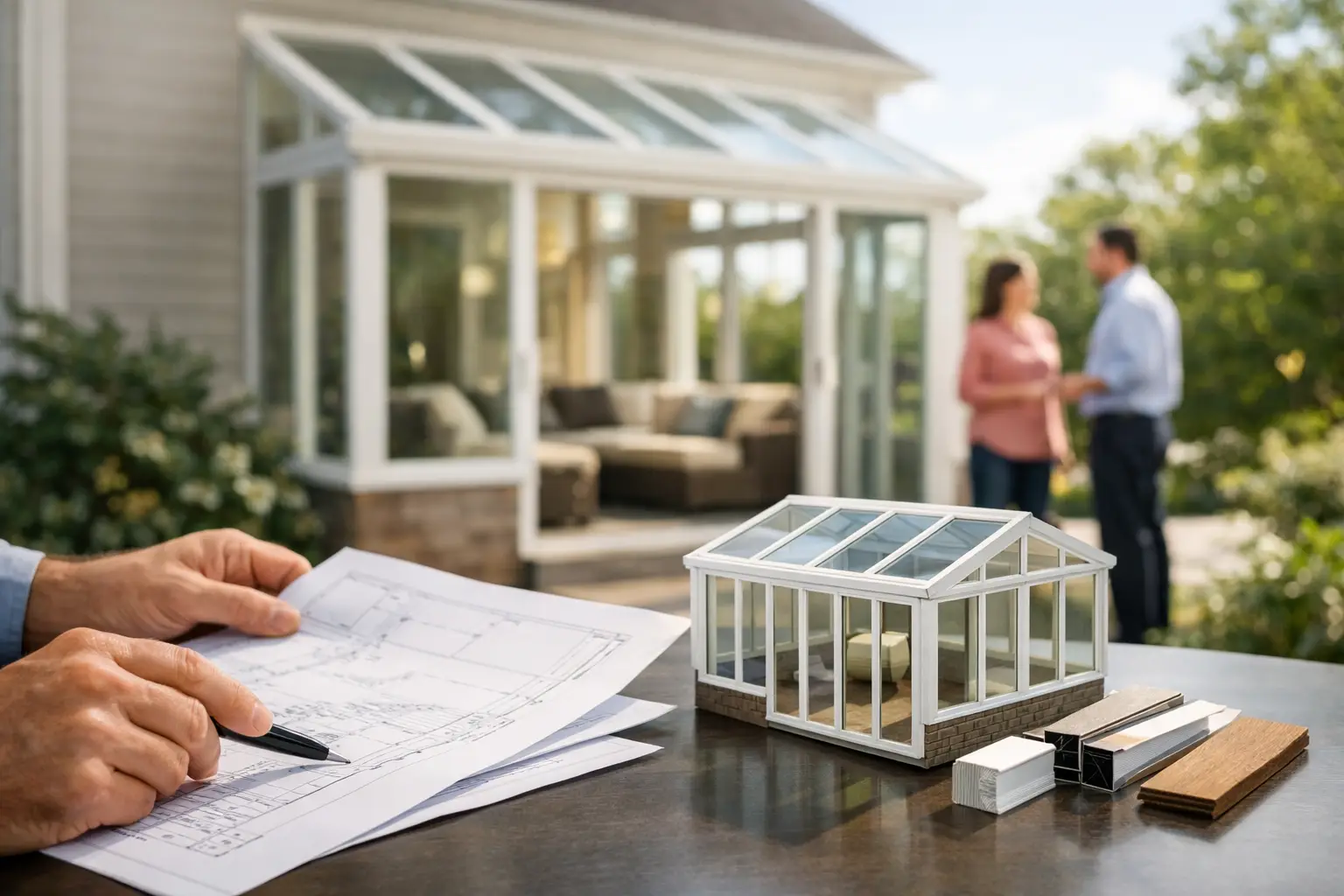
A sunroom looks simple from the yard. Four walls, a roof, a lot of glass. But along the Florida and Gulf Coast, the real test starts when the wind picks up, the rain turns sideways, and the summer heat settles in for months. That is why choosing a sunroom manufacturer is not the same as choosing a contractor with a catalog.
If you are adding living space in a coastal market, the manufacturer behind the project matters as much as the design itself. Materials, engineering, fabrication standards, and installation discipline all show up later in the form of comfort, appearance, maintenance, and storm performance. A room that looks good on day one is easy to sell. A room that still looks good and performs well years later takes a different level of company behind it.
What a sunroom manufacturer actually controls
A true sunroom manufacturer does more than sell a product line. The manufacturer controls the system design, the materials, the fabrication process, and the structural standards that determine how the room performs in the real world. That gives homeowners a very different result than buying through a dealer who sources generic components from somewhere else.
This distinction matters because every part of the enclosure has to work together. The framing, wall systems, roof system, fasteners, anchoring, seals, and glazing are not separate purchases. They are one structure. When a company manufactures its own systems, it has more control over fit, finish, load performance, and consistency from one project to the next.
For the homeowner, that usually means fewer weak points and fewer excuses. If something is engineered, fabricated, sold, and installed under one roof, accountability is a lot clearer.
Why factory-direct matters in Florida and the Gulf Coast
In mild climates, a basic enclosure may get by for a long time. In Florida and nearby Gulf Coast markets, the environment is less forgiving. Heat, humidity, UV exposure, wind, heavy rain, and salt air put constant pressure on exterior structures. That is where factory-direct manufacturing starts to separate premium systems from commodity ones.
A factory-direct company can design around local conditions instead of trying to force a national one-size-fits-all package onto a coastal home. It can also engineer projects for code compliance and structural requirements before fabrication starts, not after problems show up in the field.
There is also a pricing advantage. When you buy through layers of dealers, distributors, and subcontractors, every layer adds cost. A manufacturer that sells direct to homeowners can often put more value into the actual structure instead of the markup around it. That does not always mean the cheapest quote. In many cases, it means better materials and stronger construction for the money.
How to compare one sunroom manufacturer to another
A polished brochure is not enough. When you compare manufacturers, start with the structure itself.
Ask what the framing is made of and how it compares to standard aluminum systems. Ask how the roof is built, how water is managed, and how the system is anchored. Ask whether the project is engineered for the site and whether the company is building specifically for high-wind coastal conditions.
Then look at the business model. Does the company manufacture what it sells, or is it reselling another company’s package? Does it use its own installers or rely heavily on third parties? Does the warranty cover installation for the long haul, or only parts for a short window?
These questions quickly reveal whether you are buying a real building system or a sales package.
Materials make the biggest difference over time
Most homeowners can spot design differences right away. What is harder to see at first is the material gap between premium systems and cheaper alternatives.
Conventional aluminum has been common in patio and enclosure products for years because it is lightweight and familiar. But common does not mean best. In demanding climates, lower-grade systems can show their limits through flex, dated appearance, weaker thermal performance, or corrosion concerns over time.
That is where proprietary framing systems earn their value. A stronger, more refined structural system can improve both appearance and durability at once. It can support larger openings, cleaner lines, better rigidity, and better resistance to the conditions that wear down lesser structures. For homeowners who want the room to feel like a true extension of the home instead of an afterthought, that difference is hard to overstate.
Premium materials do cost more upfront. That is the trade-off. But on a project meant to add usable square footage, protect comfort, and enhance the home’s appearance for decades, the cheapest material often becomes the most expensive one to live with.
The right manufacturer should think like an engineer
A sunroom is part lifestyle upgrade and part structural project. Homeowners naturally focus on how they want to use the space – morning coffee, entertaining, extra room for family, protection from bugs, shade, or year-round comfort. A good manufacturer absolutely cares about that. A great one also thinks about uplift, attachment points, drainage, spans, and code requirements from the start.
That engineering mindset is especially important in coastal counties where wind resistance is not optional. If a company talks only about style and price, that is a warning sign. The stronger approach is to begin with design goals, then build those goals on a code-driven structural foundation.
This is one reason vertically integrated companies stand apart. They are not just trying to sell the next job. They have to stand behind what they fabricate and install. That changes how seriously they take details.
Installation quality is part of manufacturing quality
Homeowners often separate product quality from installation quality, but they should not. Even an excellent sunroom system can be compromised by poor installation. The best manufacturers know this, which is why they keep tight control over who installs their structures and how the work is done.
That matters in every market, but especially here. Flashing details, fastening schedules, foundation attachment, roof tie-ins, and water management all need precision. A room that is installed carelessly may still look fine when the crew leaves. Its weaknesses tend to show up later, after enough weather has tested the joints and transitions.
Certified, experienced installers are not a luxury on this kind of project. They are part of the product.
A good sunroom manufacturer should offer more than one solution
Not every homeowner needs the same enclosure. Some want a full glass sunroom with expansive views and more climate control. Others want a screen room for airflow and bug protection. Some need a patio cover or pergola to create shade without fully enclosing the space. The right manufacturer should be able to match the structure to the way the home is used.
That flexibility matters because the best value is not always the biggest project. Sometimes a simpler structure is exactly right for the property, budget, and lifestyle. The key is working with a company that can custom-build the right answer instead of pushing a single package onto every house.
For homeowners who want a premium, storm-ready structure built specifically for this region, a factory-direct manufacturer like Titan Sunrooms brings that full package together – custom design, engineered systems, direct fabrication, professional installation, and long-term warranty support.
The warranty tells you what the company believes about its own work
Warranties are easy to advertise and harder to honor. That is why the details matter.
A strong warranty suggests the company expects its systems and installation to last. A weak or narrow warranty can suggest the opposite. Homeowners should pay attention not only to how long the warranty runs, but also to what it covers. Structural confidence matters. Installation coverage matters. Service after the sale matters.
When a manufacturer is willing to stand behind installation for decades, that sends a clear signal. It says the company is not planning for a quick handoff. It expects the work to hold up.
Price matters, but value matters more
Every homeowner has a budget. That is real, and no honest manufacturer should pretend otherwise. But comparing sunroom quotes without comparing structure, engineering, materials, installation standards, and warranty support is how buyers end up disappointed.
A lower number can come from thinner systems, dealer markups hidden elsewhere, weaker installation oversight, or a design that simply is not built for the conditions around your home. Sometimes paying more is unnecessary. Sometimes it is the smartest decision on the property. It depends on what is actually being built and who is standing behind it.
The best projects are not just attractive on paper. They feel solid, look finished, and keep earning their keep year after year. If you are choosing a sunroom manufacturer, look for the company that treats your project like a permanent structural addition, not a quick enclosure sale. That mindset is what gives you a room you will keep using long after the sales pitch is forgotten.
