
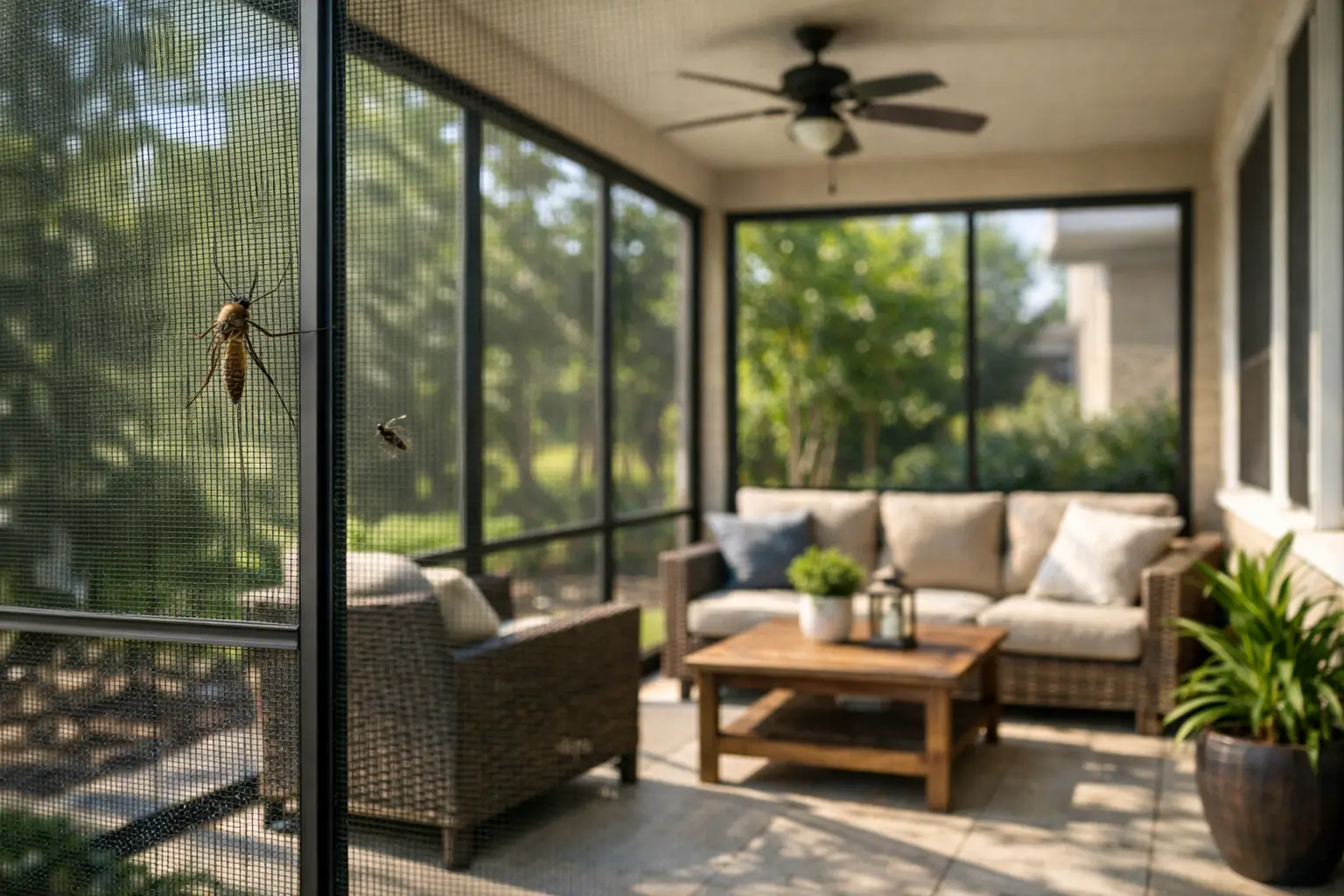
You do not notice how much bugs control your backyard until sunset. One minute you are outside with family, the next you are swatting mosquitoes, chasing flies away from food, and heading indoors earlier than you wanted. A screened patio for bugs fixes that problem in a way that feels immediate and practical – it turns an exposed patio into a space you can actually use.
For Florida and Gulf Coast homeowners, that matters more than it does in milder climates. Heat, humidity, standing water, and long bug seasons make outdoor living harder than it should be. The right screened enclosure gives you relief without closing you off from the breeze, the view, or the reason you wanted outdoor space in the first place.
Why a screened patio for bugs makes such a difference
A patio is supposed to extend your home, not become a place you avoid half the year. When insects take over, even a beautiful backyard loses value in day-to-day life. You stop eating outside, stop relaxing outside, and stop inviting people over unless the weather and bug pressure happen to line up.
Screening changes that by creating a physical barrier instead of relying on sprays, candles, zappers, or luck. Those options can help around the edges, but they do not give you dependable control. A properly designed screened patio blocks most of the pests that make outdoor time miserable, especially mosquitoes, no-see-ums, flies, and wasps looking for easy access.
It also gives you something homeowners in Florida value just as much as bug protection – comfort without feeling boxed in. You still get natural light, cross-ventilation, and a connection to the yard. That balance is exactly why screened spaces remain one of the smartest outdoor upgrades in coastal markets.
What a screened patio can and cannot do
A screened patio for bugs is highly effective, but it is not magic. It works best when the enclosure is built tightly, with quality screen material, solid framing, and careful attention to door fit, roof transitions, and attachment points. If those areas are sloppy, bugs will find the weak spots.
That is the trade-off many homeowners do not hear upfront. The idea of a screened patio is simple. The execution is not. A low-cost enclosure may look fine at first glance, but if the frame is flimsy, the screen tension is poor, or the construction does not account for movement and weather exposure, gaps can develop over time. In a bug-heavy climate, small failures become obvious fast.
It also helps to be realistic about tiny insects. Standard screen can stop the majority of common pests, but ultra-small bugs may require a finer mesh depending on your location and how severe the problem is. That can slightly affect airflow and visibility, so the right choice depends on your property, your comfort level, and what bugs you are dealing with most.
Mesh matters more than many homeowners expect
Not all screen is equal. The screen type affects bug control, durability, visibility, and maintenance. If your main enemy is mosquitoes and flies, standard insect screening often performs well. If no-see-ums are common where you live, a tighter mesh may be worth it.
The catch is that finer mesh can reduce airflow a bit compared to a more open screen. That does not mean it is the wrong choice. It means the enclosure should be designed as a complete system, not treated like an afterthought. In hot, humid regions, comfort depends on how the structure, airflow, shade, and screening work together.
Why structure matters as much as the screen
Homeowners sometimes shop for a screen room as if the screen is the product. It is not. The frame is the product. The engineering is the product. The installation quality is the product. The screen is only as reliable as the structure holding it.
That is especially true in Florida and along the Gulf Coast, where intense sun, high humidity, driving rain, salt air, and storm conditions punish outdoor structures year after year. A screened patio should not just keep bugs out on a calm spring evening. It should keep its shape, stay attractive, and continue performing after years of weather exposure.
Cheap aluminum systems often show their limits here. They can look thin, dated, and vulnerable to wear. Better systems are built for higher strength, cleaner sightlines, and longer-term resistance to the conditions that cause corrosion, loosening, and premature aging. When a screened patio is built with stronger framing and factory-controlled fabrication, homeowners get a space that feels more like a real home improvement and less like a temporary add-on.
A better enclosure feels better to live with
There is a practical side to strength, but there is also a quality-of-life side. A well-built screened patio feels secure. Doors close right. Panels stay tight. The finish holds up. The whole space looks like it belongs with the home instead of looking bolted on.
That matters because most homeowners are not adding a screened patio just to solve a bug problem. They are trying to create a better way to live at home. Morning coffee outside. Dinner without citronella smoke. Kids with room to play. A more comfortable place to read, entertain, or unwind at the end of the day.
The best locations and use cases
A screened patio works especially well over existing concrete patios, poolside lounging areas, backyard entertaining spaces, and covered outdoor seating areas that already get good use. If you have a patio that is structurally sound but underused because of insects, screening can unlock its value quickly.
It is also a strong option for homeowners who want more usable square footage without committing to a fully enclosed room addition. You get a clear lifestyle upgrade with less enclosure than a glass room, while still adding definition and purpose to the outdoor area.
If your patio gets brutal afternoon sun, bug protection alone may not be enough. In that case, combining screening with a proper patio cover or roof system can create a much more comfortable environment. Shade and bug control together usually deliver a bigger payoff than either one alone.
What to look for before you buy
Start with the company behind the enclosure. In this category, who designs, fabricates, and installs the structure matters. Factory-direct manufacturers typically offer tighter quality control than companies that resell generic systems. They also tend to have more ownership over engineering, customization, and long-term service.
Ask how the patio is engineered for local code requirements, wind loads, and site conditions. Ask what the frame is made from, what makes it stronger than standard alternatives, and how it is finished to handle heat, moisture, and coastal exposure. Ask how the screen is attached, what mesh options are available, and how entry doors are built to limit gaps.
You should also ask what happens after installation. A screened patio lives outside full time. It needs to be built by people who understand how these structures perform over the long haul, not just how to put one up quickly.
For homeowners who want a stronger, cleaner-looking system built specifically for this region, Titan Sunrooms approaches screened enclosures the way a manufacturer should – with custom fabrication, code-driven engineering, certified installation, and materials designed for long-term weather performance.
Is a screened patio worth it for bugs?
If bugs are the reason you avoid your patio, yes, it is usually worth it. The improvement is not subtle. You go from planning around insects to using your space when you want to use it. That kind of everyday convenience adds up fast.
The bigger question is whether you want the cheapest screened patio or the right one. A bargain enclosure may lower the upfront number, but if it looks weak, ages poorly, or allows problems to develop at the seams and openings, it will not feel like much of an upgrade. Homeowners in storm-prone, high-humidity markets are usually better served by treating this as a permanent improvement to the home, not a quick patch.
A screened patio for bugs works best when it is built as a durable outdoor room – strong frame, quality screen, proper fit, and design that matches the way you actually live. When all of that comes together, the backyard stops being a place you battle and starts being part of your home again.
