
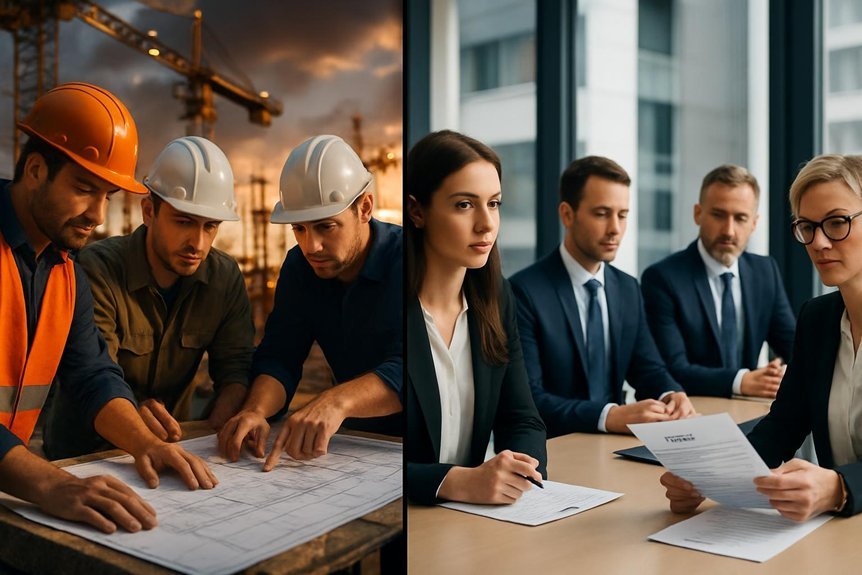
Deciding between building in-house or hiring externally can be tough. If you try the DIY route without the right skills, you risk spending more time and money fixing mistakes. Hiring professionals or contractors can save you up to 20% thanks to their expertise and industry connections. Your team’s experience, training capacity, and time constraints all play a big role in success or failure. Consider learning from real-world scenarios to make a smarter choice next.
Weighing the Costs, Benefits, and Risks

While the idea of building something yourself can be appealing, weighing the true costs, benefits, and risks is essential before making a decision. If you choose the DIY route, you’ll likely spend more time and may see costs rise from unexpected setbacks.
Your existing skills play a major role—without the right expertise, you risk errors that can trigger delays or expensive repairs. Professional contractors often save up to 20% on materials and labor thanks to their relationships, making hiring an efficient option.
However, onboarding new hires or teams has upfront recruitment and training costs that can multiply quickly. Ultimately, a hybrid approach, blending your internal skills with external experts, can help manage both financial outlays and the risks of mistakes or extended timelines.
For outdoor projects, considering factory direct benefits can reduce costs and increase durability by avoiding middleman markups and low-quality materials.
Key Factors That Impact Success
Although both building internally and hiring externally offer clear benefits, several key factors ultimately determine which approach will set your project up for success.
You’ll need to weigh your team’s necessary skills, prior experience, and the organizational capabilities at your disposal. Working with a general contractor or using external hires can quickly fill skill gaps and reduce ramp-up time due to their established expertise and team dynamics.
However, building internal capabilities through training often means lower overall costs and long-term savings, especially when developing talent from within.
Assess time constraints carefully—internal builds typically require more onboarding, while hiring can fast-track project launch.
No matter your strategy, robust training and onboarding are essential to make sure everyone aligns with the project’s goals from the very start.
For example, partnering with specialists who leverage Colorbeam Technology can improve durability and efficiency while accelerating delivery in demanding climates.
Lessons Learned From Real-World Experiences

Drawing insights from real-world experiences can greatly shape your approach to building versus hiring.
When you tackle projects yourself, you quickly realize unexpected costs and mistakes can pile up, making risk management essential. Developing your own skills and experience through hands-on work is invaluable, but if you’re not thorough with building codes, small errors can become expensive setbacks.
Many who hired professionals recognize a major benefit—contractors excel at maneuvering through building codes, saving you time and reducing stress.
However, a key cons of hiring is the upfront cost, though case studies show that building internal talent can save substantial money in the long term.
Hybrid strategies, blending internal growth with outside help, often provide the best results, enhancing efficiency and ensuring success for future projects.
For homeowners considering outdoor projects, choosing systems built with ColorBeam Framing can simplify future upgrades and add hurricane-resistant durability.
Conclusion
When you’re deciding between building or hiring, there’s no one-size-fits-all answer. You’ve seen that costs, benefits, and risks all depend on your goals, timeline, and the talent you have. Learning from real-world examples reminds you to stay flexible and realistic about what you can achieve. Ultimately, your success comes down to clear priorities and honest assessments—so trust your judgment, keep learning, and don’t be afraid to adapt as you go.
