
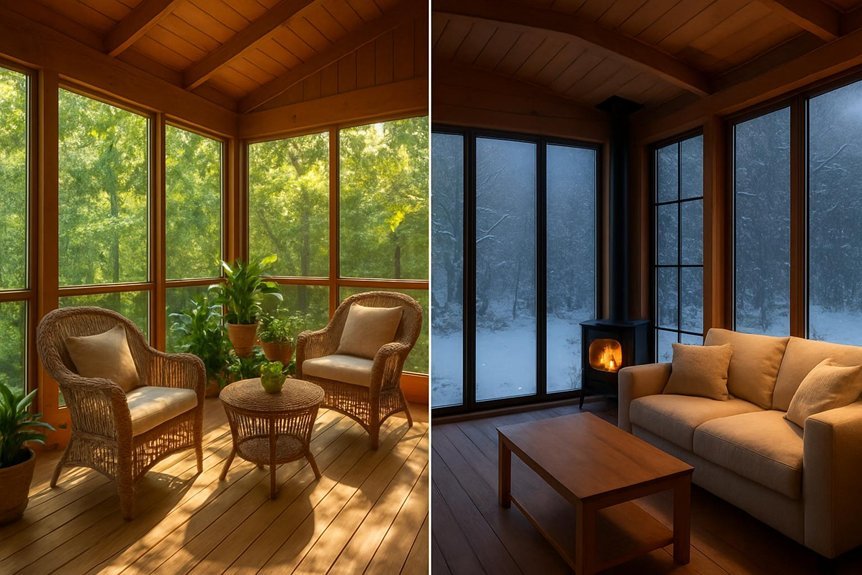
If you want affordability and a breezy spot for spring through fall, three-season porches are simple and budget-friendly, though they lack insulation and year-round comfort. Four-season porches cost more upfront but bring full climate control and boost your home’s value with quality materials and HVAC integration. Your choice depends on how much you’ll use the space and what comfort you expect in each season. Explore further to find which best fits your home and lifestyle.
Key Differences Between Three-Season and Four-Season Porches
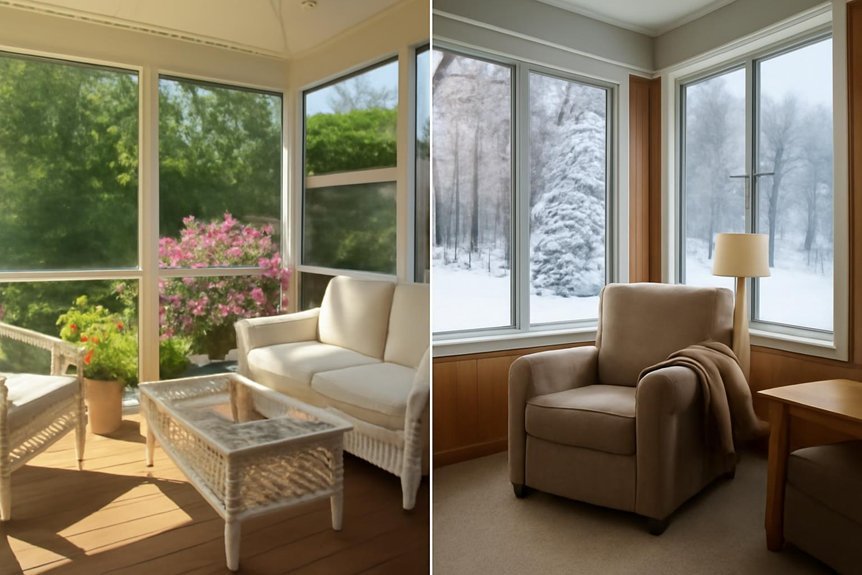
While both three-season and four-season porches extend your living space, they differ greatly in design and functionality.
In a three-season room, you typically find single pane windows or screens, limiting climate control and energy efficiency. These spaces offer additional living space through most of the year, but lack insulated walls or active heating and cooling.
On the other hand, four-season sunrooms are true home additions, featuring fully insulated walls, double or triple pane glass, and integrated HVAC systems. This allows you to enjoy them year-round, regardless of temperature extremes.
With better climate control and energy efficiency, four-season sunrooms can increase your home value.
The choice hinges on how much use and comfort you want, and how your climate affects your living preferences.
Additionally, Titan Sunrooms’ four-season designs leverage Colorbeam Technology for high-wind durability, energy efficiency, and low maintenance suited to Florida’s coastal climate.
Advantages and Drawbacks of Three-Season Porches
Affordability stands out as a major benefit of three-season porches, making them an appealing choice if you want extra living space without a hefty investment.
These three-season rooms typically involve a lower construction cost because they don’t require extensive insulation or HVAC systems. You get an enjoyable outdoor living space with shade and effective insect protection during spring, summer, and fall.
However, temperature regulation can be challenging since single-pane glass or screens let in outdoor air. You might need supplemental heating during chilly days, but winter comfort is rarely achievable.
The lighter build also means limited versatility for future upgrades, and a lack of solid barriers means pollen and dust can sneak in—potentially causing issues for allergy sufferers looking for relief during high pollen seasons.
For those weighing costs and longevity, factory-direct options can offer savings and durability thanks to superior materials supplied without middleman markups.
Advantages and Drawbacks of Four-Season Porches
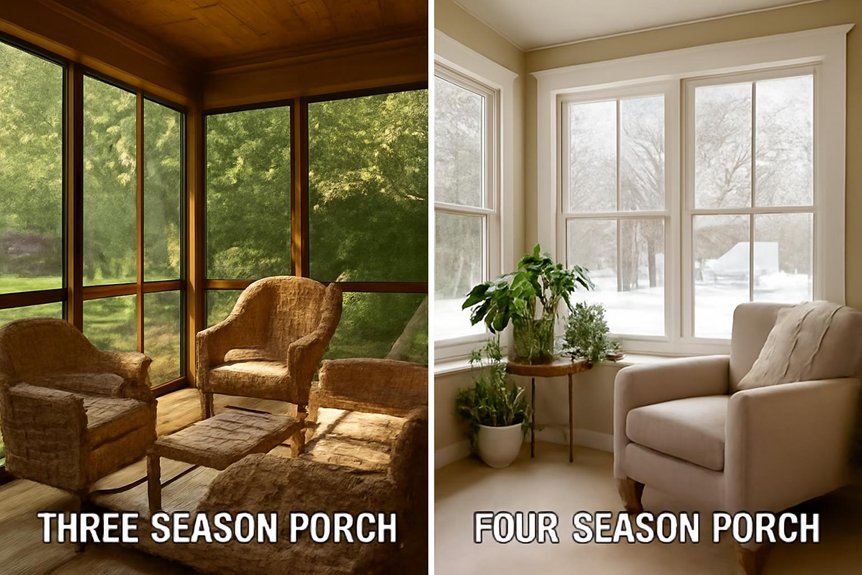
If you’re searching for greater comfort and flexibility in your porch, a four-season option stands out for its year-round usability.
Four-season rooms are fully insulated and connected to your home’s HVAC system, offering climate-controlled comfort whether it’s sweltering or freezing outside. This means you can enjoy air conditioning in the summer and heat in the winter, making the space genuinely livable and versatile for any activity.
High-quality materials, such as dual-pane glass, create an investment that also enhances your home value and curb appeal, thanks to features like vaulted ceilings and skylights.
However, these benefits come with a higher upfront cost and increased property taxes, since the added year-round use and livable space boost your home’s overall square footage.
For homes in storm-prone areas, choosing systems built with hurricane-resistant ColorBeam Framing—engineered to withstand wind loads up to 160 mph—can further enhance durability and long-term value.
Factors to Consider When Choosing Between Three-Season and Four-Season Porches
Several key factors play a role when you’re deciding between a three-season and a four-season porch.
First, consider usability: three-season rooms provide enjoyable additional space for around half the year, while four-season porches offer year-round enjoyment, ideal for all climates.
Think about insulation and climate control. Four-season porches use double or triple-pane glass and connect to your HVAC system, ensuring comfortable temperatures. Three-season rooms lack thorough insulation, limiting comfort during extreme weather.
If you’re considering a home office or a dining area, a four-season porch’s consistent temperature and abundant natural light make it a more versatile choice.
Finally, weigh the value to your home. Though more expensive, four-season porches typically increase your property’s value due to their functionality and livable space.
Conclusion
When deciding between a three-season and a four-season porch, think about your comfort, budget, and how you want to use the space. Three-season porches are affordable and great for spring through fall, but you’ll need to close them up in winter. Four-season porches let you enjoy the outdoors year-round, though they cost more upfront. Weigh the pros and cons, consider your lifestyle, and you’ll find the perfect porch to fit your needs.

A 3 season porch can be used to enjoy nature and the breezes and easily enjoy a smoke.
A 4 season porch is just another room.