
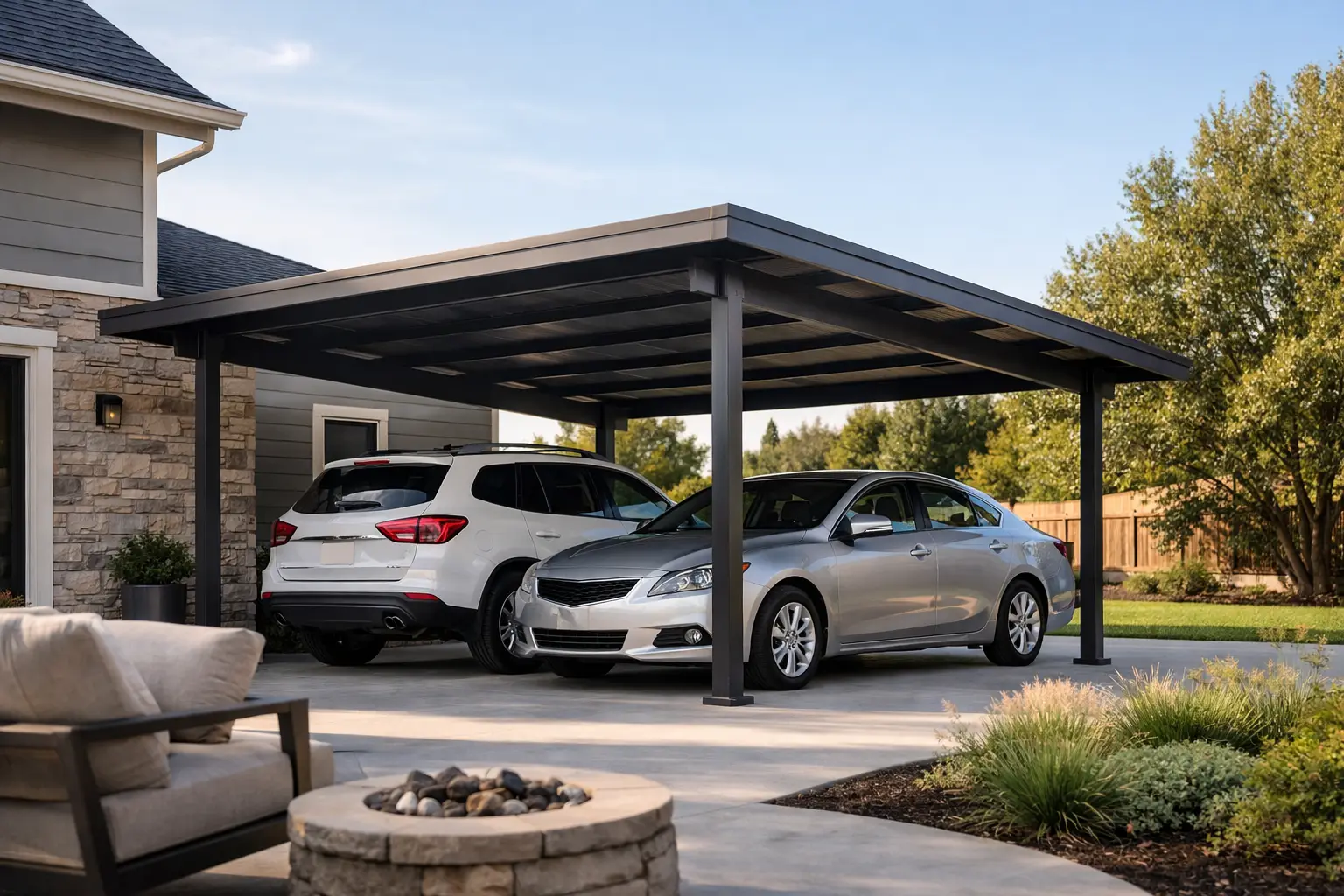
A Florida driveway can be hard on everything parked in it. Blazing UV exposure fades paint and cracks dashboards, afternoon rainstorms soak interiors during loading, and wind-driven debris can turn an uncovered vehicle into an expensive concern. Those are the practical top reasons to add carports, but the right structure does more than put a roof over a car. It creates a durable, usable extension of the home that is designed for the weather it will face.
Top Reasons to Add Carports in Florida
Protect vehicles from relentless sun and rain
Sun protection is often the first reason homeowners consider a carport, and it is a good one. Constant direct sunlight heats cabins to uncomfortable temperatures, wears down upholstery, and can make a vehicle’s finish look tired long before its time. A well-designed carport provides daily shade where it matters most – directly over the vehicles you depend on.
That shade also changes the routine of getting home. Groceries, kids, beach gear, work bags, and mobility equipment can move from car to house without a mad dash through a downpour. During the Gulf Coast’s frequent summer storms, that covered transition is not a minor convenience. It is a real improvement in how the home functions.
A carport is not a substitute for a fully enclosed garage in every situation. If secure storage, climate control, or complete protection from blowing rain is the priority, a garage may be the better fit. But for homeowners who need dependable overhead coverage without the cost and footprint of a traditional enclosed addition, a custom carport is a smart, efficient answer.
Give the driveway a finished, intentional look
An exposed parking area can make even a well-kept property feel unfinished. The difference is especially noticeable on homes with limited garage space, side parking, boat parking, or a driveway that carries several vehicles. A properly proportioned carport gives that space visual purpose.
The key word is properly. A generic, lightweight canopy may provide temporary shade, but it can look like an afterthought and may not complement the home’s roofline, trim, or exterior colors. A custom structure can be designed around the available footprint, parking pattern, roof style, and architectural details of the house.
That is where material quality becomes visible. Clean framing lines, durable roof panels, and coordinated finishes help a carport look like a permanent home improvement rather than a hardware-store add-on. Titan Sunrooms uses proprietary Colorbeam systems to deliver a stronger, more upscale appearance than conventional thin aluminum components often found in basic patio structures.
Create coverage for more than cars
The most valuable carports are rarely used for just one purpose. They are flexible covered spaces that solve several property needs over time. A two-car carport may shelter daily drivers during the week, then become a shaded staging area for a family gathering, a protected spot to unload supplies, or a dry workspace for a weekend project.
Florida homeowners also use carports for golf carts, motorcycles, boats, trailers, RVs, and outdoor equipment. These items take up valuable garage space and are often too large or awkward for interior storage. Covering them can reduce sun exposure and make access easier without turning the yard into a cluttered storage zone.
This flexibility is one reason sizing matters. A carport that is barely large enough for today’s vehicle may feel restrictive when a second vehicle, golf cart, or trailer enters the picture. During the design stage, think about clearance for doors, mirrors, walkways, equipment, and how the space may be used five or ten years from now.
Add usable space without a full room addition
A conventional addition requires enclosed walls, electrical planning, interior finishes, HVAC considerations, and a larger construction commitment. There is a place for that investment, particularly when a family needs conditioned living space. But homeowners do not always need another indoor room. Sometimes they simply need covered square footage that makes the property more useful.
A carport delivers that coverage with a lighter footprint. It can turn an open side yard or driveway into a place where everyday tasks are easier, vehicles are more comfortable to enter, and outdoor projects are less dependent on the forecast. For retirees, it can also reduce the strain of moving through rain and harsh sun. For busy families, it creates a reliable landing zone during the morning rush.
The value comes from choosing a structure that works with the home instead of competing with it. Placement, roof configuration, drainage, and access all deserve real consideration. A carport should improve traffic flow around the property, not create a tight turning radius, block an entry, or send roof runoff toward the foundation.
Why Engineering Matters for a Carport
On the Gulf Coast, a carport is not merely a shade product. It is an exterior structure exposed to high winds, heavy rain, heat, humidity, and, in coastal areas, corrosive salt air. That calls for more than a quick installation and a low upfront price.
A professionally planned carport begins with site conditions. The installer should assess attachment points or freestanding support requirements, local code rules, wind-load expectations, roof drainage, setbacks, and the condition of the existing surface. Concrete may need to meet specific requirements for anchoring. In some cases, a freestanding design is preferable to attaching a new roof system to an older or unsuitable structure.
Wind resistance is not an optional upgrade
Florida’s building environment makes structural engineering a central part of the decision. A carport needs a roof system, framing, connections, and anchors designed to work together under pressure. Weak links often show up at attachment points and anchors, not just in the visible posts and roof panels.
Homeowners should be cautious about comparing projects by price alone. Two carports can look similar from the street while having very different approaches to material thickness, fasteners, load design, water management, and installation quality. The cheaper option may be cheaper because those details have been reduced.
A factory-direct manufacturer that handles design, fabrication, engineering, and installation can maintain tighter control over those details. That matters when the structure must perform year after year, not simply look acceptable on installation day.
Water management protects the home, too
Rain coverage only helps if the water has somewhere controlled to go. A well-planned carport roof should direct runoff away from doorways, foundations, walkways, and areas where standing water becomes a nuisance. Gutters, roof slope, connection details, and discharge locations all affect whether the finished project keeps water under control.
This is also why a site visit is more useful than an online guess. The right roof direction on one home may be wrong on another because of grading, landscaping, neighboring structures, or the way vehicles enter and exit the driveway. Custom planning prevents avoidable problems before fabrication begins.
Choosing a Carport That Holds Its Value
A carport should be evaluated as a long-term property improvement, not a seasonal cover. Start with the purpose: daily vehicles, oversized equipment, covered access, or multi-use outdoor space. Then consider dimensions, clearance, location, and whether the structure must match an existing patio cover, screen room, or roofline.
Material selection deserves equal attention. Florida heat, moisture, and salt exposure are unforgiving on finishes and fasteners. Premium framing and roof systems can cost more initially, but they are often the better value when they reduce maintenance concerns and preserve the appearance of the structure over time.
Ask clear questions before committing: Is the project engineered for local conditions? Who is responsible for permits and installation? How is the structure anchored? What warranty supports the installation? Can the design be customized to the house and the way the property is actually used? Strong answers separate a permanent solution from a temporary cover.
The best carport is one you stop thinking about because it works every day. Your vehicle stays cooler, your driveway looks more complete, and rain no longer dictates how you move through your own property. Choose a structure built for Florida conditions, and that simple roof can become one of the hardest-working improvements on the home.
