

For the best insulated patio covers in heavy rain, you’ll want solid aluminum or polycarbonate panels with high-density foam insulation and integrated gutter systems. These covers block rain, dampen storm noise, and stay rust-free with minimal upkeep. Look for laminated panels and UV-resistant finishes to keep things dry and protected long term. Opt for thicker insulated roofs and leaf-guarded gutters for extra reliability. If you want more tips on perfect installation and year-round durability, there’s more ahead.
Key Features to Look for in Rain-Resistant Patio Covers
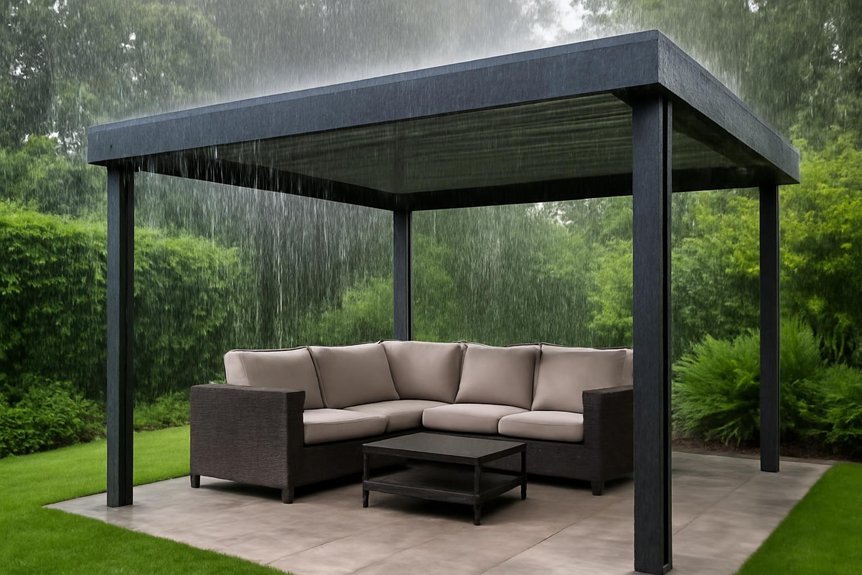
When choosing an insulated patio cover that can handle heavy rain, focus on features that guarantee both comfort and durability.
Prioritize insulated patio covers with high-density thermal insulation, which not only maintains consistent temperatures but also dampens the loud noise of heavy rain.
You’ll want strong weather resistance, so opt for models featuring laminated panel technology—this enhances protection against moisture while extending lifespan.
Aluminum is an ideal choice; it’s maintenance-free, resists rust, and stands up to the elements.
Always check for an integrated aluminum gutter system, preferably with leaf guards, to prevent water buildup during torrential downpours.
Durable materials and finishes protect against UV rays, ensuring your cover stays attractive and intact year after year, regardless of the weather’s intensity.
For added peace of mind, look for products that include a long-term 40-year warranty, reflecting durability and customer satisfaction.
Top Materials for Insulated Patio Covers in Wet Climates
Although design and installation matter, it’s the material of your insulated patio cover that truly determines how well it’ll withstand relentless rain.
For wet climates, an aluminum patio cover stands out due to its excellent weather resistance and waterproof qualities, ensuring your outdoor living area stays dry even during heavy rainfall. Insulated panels with high-density foam cores provide added protection from rain, effectively regulating temperature and combating moisture buildup.
Vinyl covers also offer waterproof reliability and low maintenance requirements, making them practical for rainy seasons. Durable polycarbonate options resist harsh weather, including rain and hail, safeguarding your space without warping.
Opting for insulated roof panels with integrated gutter systems further enhances water management, channeling runoff away and extending your patio’s lifespan in demanding, wet environments.
For Florida’s coastal rains, Titan Sunrooms’ Colorbeam Technology delivers corrosion-resistant, insulated framing specifically engineered for high wind and heavy precipitation.
Comparing Solid, Insulated, and Combination Panel Systems
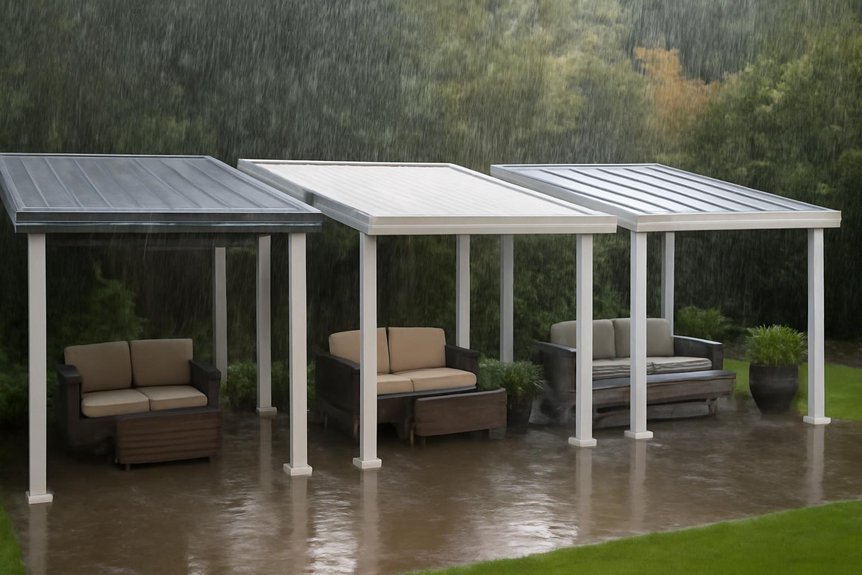
Choosing the right panel system for your patio cover comes down to balancing weather protection, comfort, and style.
Solid Insulated covers offer maximum defense against heavy rain, thanks to their layered construction and foam cores that block water, reduce noise, and boost thermal efficiency.
With insulated panel systems, you get advanced drainage capabilities, channeling water away to prevent moisture accumulation and leaks—even during the heaviest downpours.
For those wanting a blend of function and style, combination panel systems merge solid and lattice sections. These bring essential waterproofing features while allowing for customizable designs to match your aesthetic preferences.
Whether you prioritize durable protection or a seamless integration with your outdoor décor, there’s a panel system designed to withstand the elements and keep your space comfortable.
For added durability in storm-prone areas, consider systems using hurricane-resistant ColorBeam framing, which can handle wind loads up to 160 mph.
Installation and Design Considerations for Maximum Protection
Solid and combination panel systems offer impressive protection, but your patio cover’s true strength lies in thoughtful installation and smart design choices.
When installing insulated patio covers in regions facing heavy rain, prioritize integrated aluminum gutter systems and downspouts. These features efficiently manage water runoff, protecting both the insulated roof panels and your outdoor space.
Opt for thicker insulated roof panels—6 inches or more—for superior weather resistance and insulation. Secure your structural roof using concrete pier footings, as they provide a stable foundation against high winds and persistent downpours.
Customizable rafter and post options let you adapt the design for both durability and aesthetics. Don’t forget to add leaf guards to your gutter system, ensuring continuous protection with minimal risk of blockages during storms.
Maintenance Tips to Ensure Longevity and Performance
To keep your insulated patio cover performing at its best, regular maintenance is essential. Start by cleaning the aluminum panels to provide a gleaming finish and prevent dirt buildup, which can degrade performance.
One of the most important maintenance tips is to inspect and clear the integrated gutter system often, especially after heavy weather conditions, to maintain ideal water flow and avoid blockages.
Examine all seals and joints for signs of wear; reapply sealant when needed to protect the waterproof integrity. Confirm insulation panels remain well-secured and fully laminated, preventing moisture from hindering thermal performance and shortening the long lifespan of your cover.
Every few years, apply a protective coating to further boost durability and shield your insulated patio covers from environmental wear.
Conclusion
Choosing the right insulated patio cover for heavy rain isn’t just about staying dry—it’s about comfort, durability, and peace of mind. Focus on quality materials, tight construction, and thorough installation to guarantee your cover stands up to the toughest downpours. With proper care and smart design, you’ll enjoy your outdoor space no matter the weather. Don’t compromise; invest in a patio cover that keeps you protected and makes rainy days something to look forward to.
