
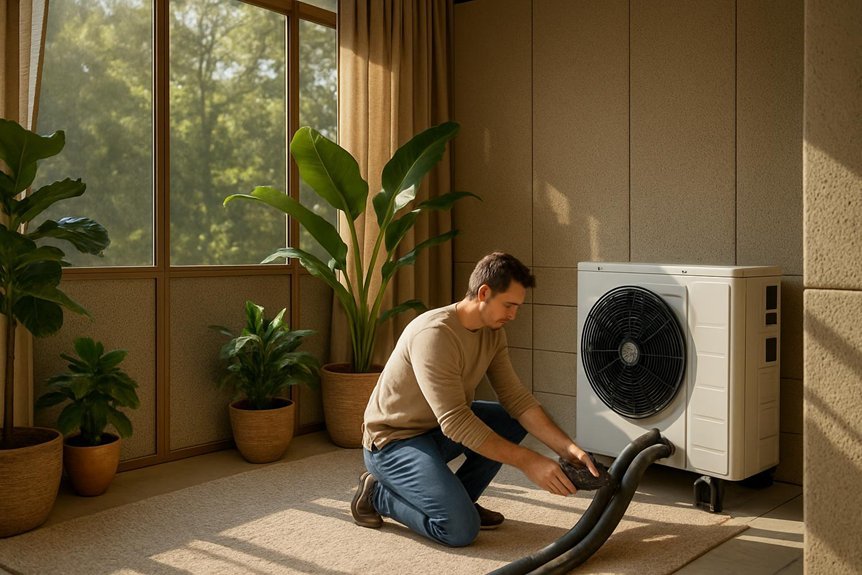
To reduce HVAC noise in your screen room, line walls and ceilings with sound-absorbing materials and install acoustic panels or tiles. Insulate ductwork with high-NRC materials to cut noise from airflow and vibration. Rearrange seating away from noisy HVAC components and use indoor plants as natural sound barriers. Keep your HVAC system well-maintained to prevent excessive noise. These practical changes make a big difference—discover even more strategies to create a quieter, more comfortable space ahead.
Add Sound-Absorbing Materials to Minimize Reflection

When you line your screen room with sound-absorbing materials, you’ll quickly notice a drop in unwanted echo and noise.
Start by installing acoustic panels on the walls and ceiling—these notably boost sound absorption and noticeably reduce HVAC noise and overall noise levels.
Consider using sound-absorbing tiles made from fiberglass or mineral fiber—they’re excellent at limiting reverberation and enhancing acoustic comfort.
Bring in soft furnishings like rugs, plush seats, and heavy curtains. These not only improve the room’s style but also tackle noise pollution by dampening sound.
Indoor plants offer a natural touch while their leaves and branches contribute to sound absorption.
Finally, strategically placed foam composites provide high-impact control, helping you achieve a more peaceful space where unwanted noise is truly minimized.
For durability and stability that supports added acoustic treatments, Titan’s ColorBeam Framing is engineered to withstand wind loads up to 160 mph while offering a modern alternative to traditional aluminum.
Insulate Ductwork to Decrease Airflow Noise
Take control of disruptive HVAC sounds by focusing your efforts on the ductwork itself.
Insulating your ductwork is one of the most effective ways to reduce unwanted noise in screen rooms. By lining ducts with materials like fiberglass or foam insulation designed to absorb sound waves, you’ll greatly decrease the noise created by rushing airflow.
Choose products with a high Noise Reduction Coefficient (NRC) for maximum sound absorption. Insulated duct liners inside the ductwork also help minimize vibrations, further reducing HVAC sound transmission.
Make sure the insulation fits snugly around ducts to prevent annoying whistling or echoing noises. By investing in proper insulation, you can reduce ductwork noise by up to 80%, instantly improving your room’s acoustic environment and overall comfort.
For long-term peace of mind, consider products backed by a 40-year warranty, reflecting a strong commitment to durability and customer satisfaction.
Rearrange Seating and Workspaces Away From Noisy Components

While insulating ductwork cuts down on airflow noise, you can make an even bigger difference by thoughtfully organizing your screen room.
For effective HVAC noise reduction, place seating and workspaces at least 10-15 feet from HVAC units. This distance helps reduce the noise impact caused by fans and compressors.
Arrange furniture so unwanted noise is deflected away from occupied spaces, improving comfort and making conversations easier. Take advantage of quieter areas for relaxation or focused tasks.
In both commercial and industrial screen rooms, use acoustic panels or even room dividers to block noise from key activity zones.
Regularly assess your layout and move equipment if needed to keep noise sources away from where you spend the most time.
These strategies help you reduce noise and create a more peaceful screen room.
For Florida installations, choosing structures built with Colorbeam Technology can further dampen noise thanks to thicker framing and insulated panels designed for coastal climates.
Incorporate Indoor Plants for Improved Sound Absorption
A handful of well-chosen indoor plants can markedly reduce noise in your screen room by absorbing sound waves with their leaves and stems.
You’ll notice that plants with dense foliage are particularly good at HVAC sound dampening, acting as a natural acoustic lining that helps reduce noise pollution.
Strategic placement—especially grouping larger plants near your HVAC units—creates a living sound barrier, boosting the noise reduction coefficient (NRC) in the room for improved sound absorption.
Beyond cutting noise, these indoor plants purify the air, resulting in a fresher, more comfortable atmosphere.
By arranging a variety of species around noisy areas, you enhance both aesthetics and acoustics.
This simple, eco-friendly approach helps lower unwanted sound frequencies and supports a quieter, more pleasant environment in your screen room.
Maintain Your HVAC System Regularly to Prevent Excess Noise
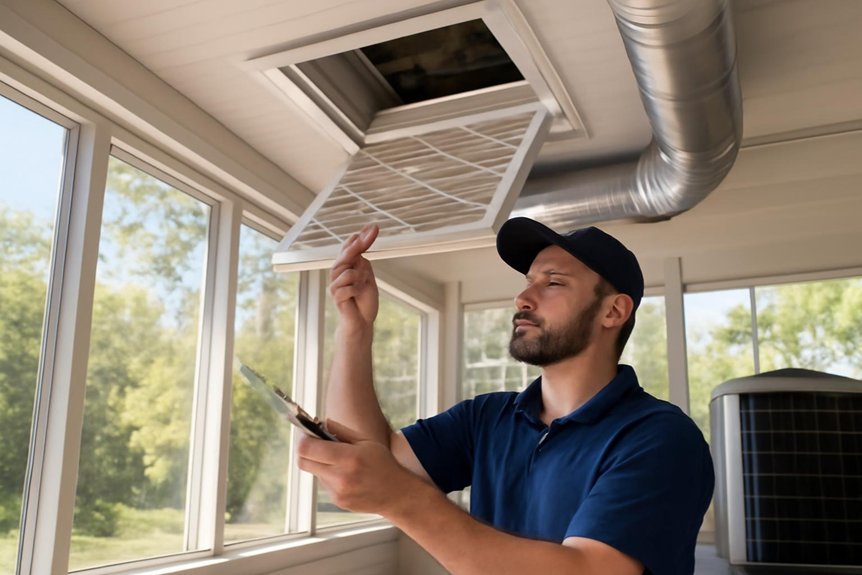
Even with the best noise barriers in place, your HVAC system can still produce excess sound if it isn’t properly maintained. Regular maintenance is essential for effective noise mitigation in screen rooms.
Clean and lubricate your HVAC systems often to prevent dust and debris buildup, which reduces noise from moving parts. Tighten any loose components to minimize rattling and operational noise.
Don’t overlook worn-out parts like fan blades or compressors—replacing them when needed keeps your system running efficiently and more quietly. Seal any air leaks in ductwork to stop unwanted sounds, such as whistling or airflow noise, from reaching your space.
Finally, schedule annual professional inspections. A technician will catch hidden problems early, ensuring your HVAC sound stays controlled and your environment remains peaceful.
Conclusion
Reducing HVAC noise in your screen room doesn’t have to be complicated. By adding sound-absorbing materials, insulating ductwork, and rearranging your seating, you’ll enjoy a quieter space right away. Don’t forget that indoor plants not only look great but also help mute unwanted sounds. And of course, staying on top of your HVAC maintenance goes a long way. With these simple changes, you’ll make your screen room much more relaxing and enjoyable for everyone.
